
Engineered Assortments
Precision Asian-Fit Eyewear Assortment for South Korea Wholesale
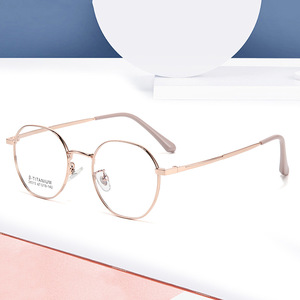
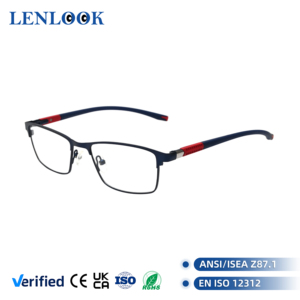
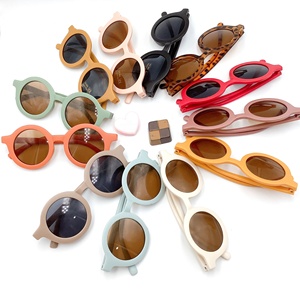
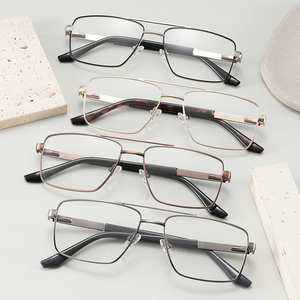
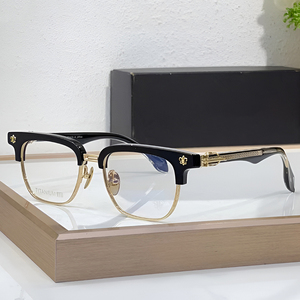
Curated specifically for South Korean optical retailers, clinic boutiques, and e-commerce distributor platforms, incorporating modified splay angles, calibrated pantoscopic tilt, and lightweight titanium/TR90 architectures.
Engineering Specifications
Biomechanics of Asian Fit: Solving the Anatomical Mismatch in South Korea
Standard Western frame geometry causes constant ocular slippage, temple indentation, and cheekbone resting for East Asian facial profiles. Our manufacturing protocol recalibrates structural parameters according to Korean Anthropometric Data.
Elevated Pad Arms & Calibrated Splay Angles
South Korean patients commonly present with a lower nasal bridge index. We engineer goose-neck pad arms with an additional 3.5mm vertical rise, combined with a 25°–35° outward splay angle. This design distributes downward gravitational pressure along the nasal bone rather than soft tissue, completely preventing the frame from sliding during long work hours in digital environments.
- Extended 11.5mm–13.0mm pad arm clearances
- Surgical-grade medical silicone & hypoallergenic beta-titanium pads
- Eliminates red bridge indentations and contact dermatitis
Flattened Base Curve & Reduced Pantoscopic Tilt
Standard frames feature an 8°–12° pantoscopic tilt and steep front curvature (5 to 6 base), forcing the bottom rim directly into prominent zygomatic cheekbones when the wearer smiles or speaks. Our dedicated Korean series utilizes a flattened front wrap (3.5 to 4 base curve) and tightens the tilt to 4°–6°, preserving an optimal 12mm vertex distance.
- Zero cheekbone impingement during facial movement
- Minimized prismatic aberrations on high-index progressive lenses
- Stabilized focal centers for high minus (-4.00D to -9.00D) prescriptions
Expanded Temple Width & Modified Ear-Stem Curvature
Brachycephalic cranial morphology results in wider bitemporal distances. Standard European narrow-temple designs cause excessive pinching at the sphenoid bone, leading to tension headaches. Our frames employ pre-curved flex temples and high-elasticity hinges that flare outwards seamlessly before gently hooking around the mastoid area.
- Temple span expansion up to 142mm–148mm without chassis deformation
- Elimination of lateral temporal bone compression
- Optimized balance ratio between frontal eye wire and ear stem
| Dimensional Metric | Western Standard Fit | Our Precision Asian Fit (Korea Spec) | Clinical Advantage in Korean Dispensing |
|---|---|---|---|
| Nasal Bridge Crest Height | 0mm to +1.5mm flush | +3.5mm to +5.0mm extended stem | Secures resting posture on low/broad nasal bridges; zero lens descent. |
| Pantoscopic Angle | 8° – 12° steep tilt | 4° – 6° ergonomic tilt | Completely eliminates lower eye-wire cheek touching during speech and eating. |
| Frame Front Curvature | 5.5 – 6.0 Base curve | 3.5 – 4.0 Flat Base curve | Prevents lens periphery from contacting the temples and eyelashes. |
| Pad Arm Splay & Swing | Fixed 15°–20° splay | Adjustable 28°–35° wide splay | Equalizes weight distribution over surface area, eliminating redness. |
| Bitemporal Width Clearance | 132mm – 136mm | 142mm – 148mm ergonomic bow | Relieves cranial side pinching on wider brachycephalic skull profiles. |
Regional Market Realities
Localized Application Scenarios Across South Korean Optical Channels
Understanding where and how South Korean end-users wear their glasses allows optical buyers to optimize category curation, reducing return rates while expanding average basket sizes.
Pangyo Techno Valley & Digital Screen Fatigue
Software engineers, game developers, and corporate analysts in Gyeonggi and Gangnam spend upwards of 11 hours daily in front of multiple OLED displays. The market demand centers on ultra-lightweight hybrid frames paired with blue-light filtering or photophobia tints such as FL-41.
- Sub-12g chassis weights to minimize vertex fatigue
- Stable vertical alignment for computer multifocal and progressive lenses
Seongsu-dong & Hongdae Fashion Eyewear Boutiques
South Korea’s trendsetting youth demographic views optical frames as indispensable personal identity markers. Polygonal geometries, vintage crown-pantos, and crystal acetate full-rims dominate this segment, demanding refined manufacturing without unrefined bulk.
- Architectural bevels and micro-engraved metal core wiring
- Translucent acetate tones: Champagne, Smoke Grey, and Pale Amber
Namdaemun Optical Wholesale District High-Volume Distribution
The Namdaemun market acts as the core logistical hub supplying thousands of independent opticians across the country. Fast-moving replenishment, ready stock availability, zero-defect hinges, and pre-adjusted temple angles represent the decisive competitive factors.
- Standardized barrel screws resistant to backing out during ultrasonic cleaning
- Multi-tier wholesale packaging options with custom barcoding
Outdoor Culture: Golf, Bukhansan Trekking & Cycling
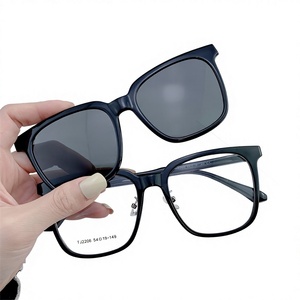
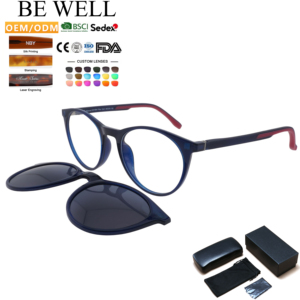
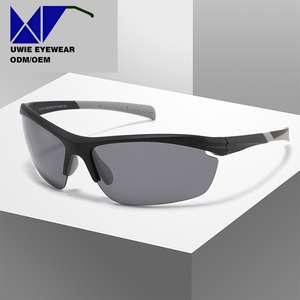
With golf and alpine hiking representing massive recreational markets across South Korea, athletes require wrap frames that provide wide peripheral vision without cheek contact. Polarized clip-ons and semi-rimless TR sports frames eliminate sweat pooling and fog accumulation.
- UV400 Category 3 polarized filtration with hydrophobic oleophobic coatings
- Anti-slip rubberized temple co-injections resistant to sebum and sweat
Market Intelligence
Emerging Trends in the South Korean Eyewear Industry
Strategic sourcing requires forecasting regulatory shifts, consumer behavioral patterns, and materials science evolutions driving the Korean optical retail sector.
Surging Prevalence of Early High Myopia
South Korea maintains one of the world's highest myopia prevalence rates among adolescents and young adults, exceeding 85% in urban demographics. This clinical reality drives disproportionate demand for frames with deeper bevel grooves capable of concealing high-minus lens edge thicknesses (1.67 and 1.74 ultra-high refractive index lenses) without looking heavy.
Hyper-Lightweight Beta-Titanium and Bio-Resins
Consumer fatigue with heavy acetate has precipitated an explosive shift toward pure titanium and ultra-thin flexible TR90. Discerning Korean consumers expect total frame weights between 7g and 11g. Frames must maintain rigid optical axis centering under continuous strain, avoiding frame-creep distortion.
Expansion of Silver Presbyopic Retailing
As South Korea navigates super-aged society demographics, optical dispensaries are rebalancing frame boards toward active seniors. Frame styles must incorporate progressive lens corridors without looking like clinical medical devices. This requires modern polygonal eye wires featuring 32mm+ minimum optical depth specifications.
Enterprise Capabilities
Why South Korean Importers & Optical Chains Source With Us
Combining the clinical precision of 75+ years of optical industry heritage with world-class lean manufacturing facilities, dedicated export logistics, and end-to-end regulatory compliance.
75+ Years of Ophthalmic Legacy
Rooted in more than seven decades of frame distribution and optical engineering experience, our quality protocols reflect deep optometric understanding. We don't merely manufacture aesthetic rims; our technicians analyze lens stress axes, eye wire tension tolerance, and hinge mechanical endurance across tens of thousands of cycles.
- Proprietary hinge testing (25,000+ opening/closing stress cycles)
- Zero-tolerance screw stabilization preventing loose temple arms
Rigorous KC Certification & MFDS Readiness
Entering the South Korean market requires strict adherence to safety standards. Every production batch meets Korean KC Mark guidelines, including nickel-release laboratory testing under EN 16128, non-toxic biocompatible skin contact testing, and lead/cadmium raw material screening before export clearance.
- Complete batch inspection documentation provided per shipment
- Custom laser engraving for registered KC mark & model numbers
Direct Supply Chain with Low MOQs & Rapid Replenishment
We eliminate redundant intermediary trading markups. With expansive warehousing, our Korean partners enjoy low minimum order thresholds (MOQs) for ready-stock models alongside rapid turnarounds for custom OEM/ODM brand production runs, backed by direct air-cargo freight to Incheon International Airport.
- In-stock models ready for dispatch within 72 hours
- Dedicated Korean-speaking B2B account support teams
Procurement Guide
Frequently Asked Questions by South Korean Optical Importers
Key technical, regulatory, and logistics inquiries addressed by our international trade and optical engineering division.
How do your frames comply with South Korean safety and KC Certification regulations?
All frames manufactured for the South Korean market undergo strict third-party laboratory verification. We conduct nickel release testing compliant with EN 16128 standards, skin sensitization assays, and environmental substance checks (lead, cadmium, phthalates). We provide full chemical assay certificates and can laser-etch your specific KC identification marks, model codes, and Korean labeling on the inner temple arms prior to customs clearance at Incheon or Busan.
Can you provide custom bridge and pad arm modifications for Korean private label brands?
Yes. As an originating OEM/ODM manufacturer, we can alter pad arm heights, change standard fixed bridges to adjustable titanium splay arms, or adjust the base curve on our standard catalog silhouettes. We also produce custom-tooled acetate nose pads with high-lift build-ups specifically designed for East Asian nasal structures.
What are the minimum order quantities (MOQ) and lead times for shipments to South Korea?
For ready-stock models across our 19 curated collections, our minimum order quantity starts as low as 50 pieces per style with multi-color assortment flexibility, shipping within 3 to 5 business days via DHL/FedEx or consolidated air cargo to Incheon. For full custom OEM/ODM brand manufacturing requiring new tooling and bespoke pantone acetates, our standard MOQ is 300 to 500 pieces per model with a production turnaround of 45 to 60 days.
How do your frame designs accommodate high-minus (-4.00D to -9.00D) Korean lens prescriptions?
Given the high prevalence of myopia in South Korea, our optical frames are built with calibrated eyewire groove depths (up to 2.2mm) and optimized box dimensions (eye sizes between 48mm and 52mm). This minimizes edge thickness visibility for high-index 1.67 and 1.74 lenses while keeping the optical center precisely aligned with the patient's visual axis.
Do you offer drop-shipping or localized bonded warehousing support for Korean e-commerce platforms?
We work closely with major Korean freight forwarders and can facilitate consolidated bulk shipments directly into Incheon Free Economic Zone (IFEZ) bonded warehouses. While standard B2B orders ship directly to your retail or distribution center, we provide custom palletizing, individual barcode scanning labels, and EDI packaging lists configured for Korean ERP systems.