
75+ Years
Optical Legacy & Curation
447+ Styles
Across 19 Curated Lines
100% Inspected
Optical Lab Grade QC
USA Hub
Worldwide Assortment Supply
Featured Ophthalmic & Protective Optical Lines
Explore high-velocity frames engineered with aerospace-grade beta-titanium, high-density cellulose acetate, flexible memory polymers, and polarized ophthalmic shields.

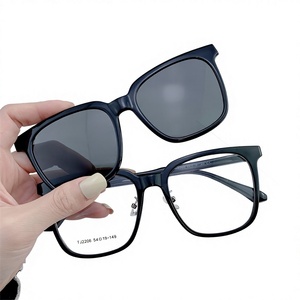
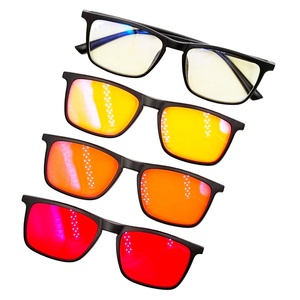
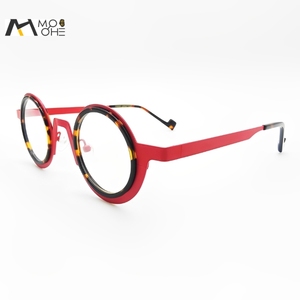
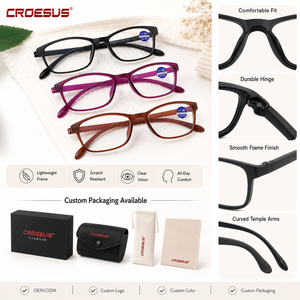

1. The Engineering Anatomy of Premium Round Spectacle Frames
In ophthalmic dispensing, round spectacle frames represent both an iconic design archetype and an intricate manufacturing discipline. Unlike rectangular or cat-eye architectures that permit structural leeway along vertical and horizontal axes, an authentic round or modified P3 frame geometry requires exact radial symmetry to prevent axis distortion when cutting and mounting high-cylinder prescription lenses. When sourcing from certified spectacle factories, eyecare professionals (ECPs) and optical supply chains must evaluate structural equilibrium, pantoscopic tilt (typically calibrated between 7° and 9°), and bridge distribution to eliminate unwanted vertex distance variations.
High-reliability factories deploy precise five-axis CNC profile milling for acetate rims and micro-plasma micro-welding for pure titanium assemblies. A standard P3 or circular profile features distinct mechanical zones: the eyewire rim groove, the endpiece hinge block, the bridge joinery, and the temple arm taper. In premium titanium round frames, the eyewire is cold-rolled with an internal V-groove angle of exactly 110 degrees, accommodating standard 1.50 through 1.74 high-index bevels without inducing peripheral lens tension that triggers birefringent stress patterns or lens pops during temperature shifts.
Pure Titanium & Beta-Ti
Aerospace-grade Japanese titanium stock offers ultimate tensile strength-to-density ratios. Beta-titanium (Ti-15V-3Cr-3Sn-3Al) temple arms deliver flexible memory properties, preventing temporal skull compression.
High-Density Bio-Acetate
Formulated from wood pulp and cotton linters plasticized with plant-derived tributyl citrate. Cured through a 60-day desiccation cycle to guarantee dimensional stability against thermal warping and shrinkage.
Sintered Hinge Mechanics
Multi-barrel barrel-and-pin or precision screw-lock hinge units engineered from phosphor-bronze bearings. Rigorously tested to withstand over 25,000 continuous opening/closing cycle stress tests.
2. Technical Evaluation: Round Frame Metallurgy & Material Characteristics
B2B optical buyers often face margin erosion when defective bridge welding or electroplating failure causes returns at the dispensary counter. Sourcing high-grade round spectacle frames requires vetting factories based on their material metallurgy, vacuum physical vapor deposition (PVD) coating thickness, and biocompatibility testing (nickel release compliance under EN ISO 12870 and REACH regulations).
| Frame Material Substrate | Density (g/cm³) | Flexural Modulus (GPa) | Corrosion Resistance | Primary Clinical Application |
|---|---|---|---|---|
| Grade 2 Pure Titanium | 4.51 | 105 - 110 | Superior (Salt-spray 120h+) | Hypoallergenic adult luxury, featherweight ophthalmic |
| Beta-Titanium Alloy | 4.68 | 75 - 85 (High Elasticity) | Superior (Immune to sweat) | Ultra-flexible temples, rimless round bridge components |
| High-Density Cellulose Acetate | 1.28 | 2.8 - 3.4 | Excellent (Non-reactive) | Vintage P3 silhouettes, architectural bold round frames |
| Swiss TR90 Polymer (Grilamid) | 1.02 | 1.4 - 1.8 | Very High (Stress-crack proof) | Active lifestyle, pediatric frames, clip-on hybrids |
| Stainless Steel (SUS304/316L) | 7.93 | 193 - 200 | High (With PVD passivated layer) | Cost-effective ultra-thin wire profiles, minimalist designs |
Global Optique’s curation protocol incorporates strict automated lab inspection parameters. Every batch of round optical chassis is tested for galvanic corrosion, sweat immersion endurance at 40°C, and bridge deformation tolerances under ISO 12870:2018 standards, ensuring that retail optometry boards experience near-zero defect returns.
3. Sourcing Trends: The 2025–2030 Evolution of Round Spectacle Procurement
The global spectacle frames market is experiencing fundamental structural transitions driven by demographic shifts, ergonomic personalization, and ecological mandates. Practice procurement directors and chain store purchasing officers must adapt to three paramount procurement currents reshaping wholesale frame inventory:
Shift to Micro-Batch Agile Releases
Traditional rigid 1,000-piece single-color MOQs are being replaced by dynamic agile batch procurement. Practice groups now demand collections like Prime Image, Contessa, and Journeyman with immediate regional stock availability to mitigate capital overhead and obsolete display slots.
Bio-Circular & Recycled Raw Materials
Regulatory frameworks (including EU CSRD guidelines) have accelerated demand for verified zero-phthalate bio-acetates, recycled marine co-polymers, and solvent-free electro-dipping. Factories incapable of demonstrating material chain of custody are being delisted from premier buying programs.
Anatomical Diversity & Extended Fit
Standardized sizing fits fewer than 62% of diverse global populations. Lines such as Wide Guyz (larger bridges, temple lengths reaching 155mm) and custom low-bridge fit (Asian/Universal bridge geometries) prevent frame slide and cheek contact in high-powered spherical round prescriptions.
Furthermore, digital refraction suites and virtual try-on (VTO) telemetry require frame manufacturers to supply millimeter-accurate 3D CAD files (.OBJ and .GLTF formats) alongside physical stock. Global Optique bridges this technological frontier, equipping partners with validated digital models alongside physical merchandise boards.
4. Global Optique Enterprise Value: 75+ Years of Supply Chain Integrity
Rooted in St. Cloud, Minnesota, Global Optique has served independent optometry practices, clinical groups, and international optical distributors for over three-quarters of a century. Our platform eliminates the vulnerabilities typical of direct overseas factory contracting—such as unchecked metallurgical impurities, inconsistent barrel tolerances, shipment delays, and unverified raw materials.
Our comprehensive wholesale catalog features over 447 distinct styles across 19 curated collections, spanning high-tech pure titanium (Executive Titanium, Kishimoto High Tech), pediatric impact-proof eyewear (Junior Elements, Kidz Eyez, Tots, Dr. Seuss), specialized wide fits (Wide Guyz), and protective safety designs (armouRx). Backed by direct domestic stocking in the United States, our partners benefit from prompt shipment, dedicated corporate account executives, and uncompromised lab compliance verification on every frame.
Frequently Asked Questions for Wholesale Optical Buyers
Detailed technical, compliance, and ordering parameters for dispensary owners, clinical purchasing directors, and distributor networks.
Why is circular geometry more demanding during lens glazing?
Circular and modified round rims possess rotational symmetry. If the internal eyewire groove depth varies even by 0.08mm, lens edging machines risk minor cylinder axis misalignment during thermal expansion or lens locking. Trusted optical suppliers utilize precision laser-calibrated eyewire profiles and rigid lens bevel tracks to guarantee total optical cylinder stability for astigmatic patients.
What quality certifications must optical factories uphold?
Compliant spectacle manufacturing requires adherence to ISO 12870 (Ophthalmic optics — Spectacle frames), ISO 13485 (Medical devices quality management systems), CE marking compliance under the European Medical Device Regulation (EU MDR 2017/745), and US FDA 21 CFR 886.5844 Class I registration for spectacle chassis.
How does Global Optique handle MOQ and sample verification?
Unlike raw foreign factories requiring thousands of units per mold, verified B2B account holders access curated tiered purchasing, sample evaluation sets, and rapid replenishment models across all 19 collections directly from our Minnesota operations center.
What prevents surface discoloration on metallic wireframes?
Substandard frames rely on cheap flash electroplating that flakes under human perspiration acidity. Premier suppliers utilize multi-layer vacuum Ion Plating (IP) or Physical Vapor Deposition (PVD) capped with an electrophoretic transparent ceramic lacquer, maintaining luster across years of clinical wear.
Can round spectacle collections accommodate high progressive additions?
Yes. Proper progressive lens adaptation requires a minimum vertical fitting height (B-measurement) of 28mm to 32mm. Classic round, oval, and pantoscopic P3 shapes provide expansive vertical reading channels, making them ideal ergonomic vectors for modern free-form progressive lenses.
How do you verify hypoallergenic properties for pure titanium frames?
Every lot designated under lines such as Executive Titanium and Kishimoto Signature undergoes spectroscopic verification to guarantee zero nickel leaching. Pad arms and temples use medical-grade silicone or food-contact CP propionate coatings to safeguard sensitive skin.