
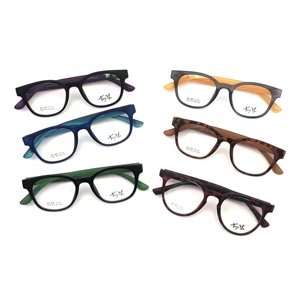
Featured Precision Collections
High-Performance Optical Frames & Ergonomic Solutions
Explore our export-certified precision eyeglass collections engineered for optical practices, retail chains, and international wholesale distributors.
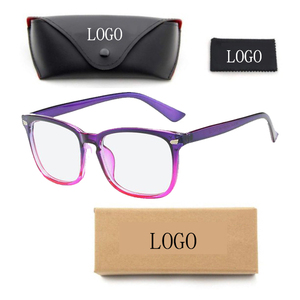
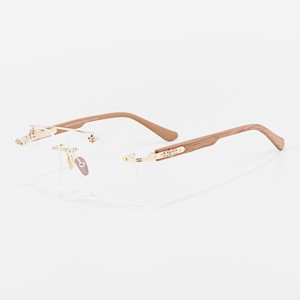
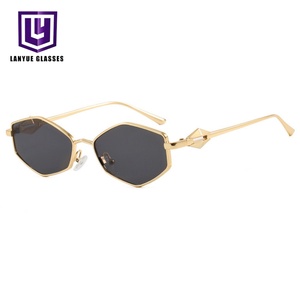
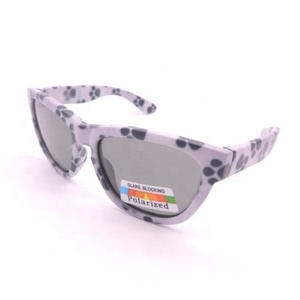
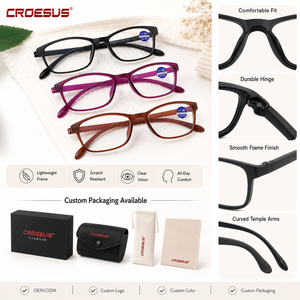
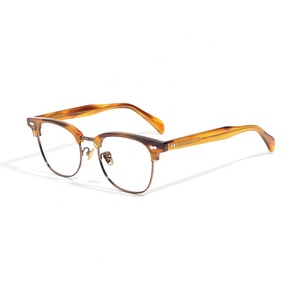
75+ Years Optical Heritage
Why Tier-1 Eyewear Brands Source Beta-Titanium From Us
Anchored in decades of optical engineering excellence and backed by advanced manufacturing plants in China, we unite American dispensing ergonomics with deep metallurgy.
75+
Years Industry Lineage
447+
Active Wholesale Styles
100%
Biocompatible Beta-Ti
±0.02mm
CNC Milling Tolerances
Aerospace Ti-15V-3Cr-3Sn-3Al Alloy
We exclusively source vacuum-melted high-ductility Beta-Titanium raw wire and sheets, ensuring ultra-high spring elasticity, structural shape recovery, and zero permanent hinge fatigue.
Precision Micro-Plasma Laser Welding
Employing high-purity argon-shielded micro-plasma and fiber laser joining systems that eradicate brittle heat-affected zones (HAZ) at bridge joints and end-piece assemblies.
Ion-Plating (IP) PVD Vacuum Coating
Our eco-friendly physical vapor deposition (PVD) vacuum chambers deposit titanium nitride and DLC layers up to 1.2 microns, passing 96-hour artificial sweat and salt spray tests (ISO 12870).
Full Regulatory & Ophthalmic Compliance
Registered medical device compliance including FDA direct manufacturer listings, CE certifications (MDR 2017/745), REACH nickel-release compliance (EN 1811), and ISO 9001 quality rigor.
Metallurgical Whitepaper
The Physics of Beta Titanium Eyewear: Elasticity, Yield Strength & Dispensability
Why modern ophthalmic buyers choose metastable β-Titanium alloys over commercial pure titanium, nickel-silver, and memory wire.
In high-end ophthalmic dispensing, patient satisfaction hinges upon two critical biomechanical factors: frame mass and pressure equilibrium across the mastoid and nasal dorsum. While Commercially Pure (CP) Titanium Grade 1 through Grade 4 provides exceptional corrosion immunity and biocompatibility, its rigid Hexagonal Close-Packed (HCP) alpha crystalline matrix limits temple flexure and can complicate lab adjustments. Beta-titanium (β-Ti), predominantly alloyed with elements such as vanadium, chromium, tin, and aluminum (e.g., Ti-15V-3Cr-3Sn-3Al), transitions into a Body-Centered Cubic (BCC) crystal structure.
Core Technical Takeaway: The BCC lattice of Beta-Titanium reduces Young's Modulus to roughly 82–105 GPa (compared to 110–120 GPa for CP Titanium and 205 GPa for stainless steel), while simultaneously increasing tensile yield strength beyond 1,000 MPa. This produces the iconic "super-elastic flexure" without plastic deformation.
Mechanical Property Matrix: Eyewear Frame Alloys Compared
For procurement directors and technical assorting executives, understanding these metallurgical differences protects margins by reducing breakage returns:
| Material Classification | Crystalline Lattice | Tensile Yield Strength (MPa) | Elastic Modulus (GPa) | Skin Biocompatibility | Cold Workability |
|---|---|---|---|---|---|
| Metasable β-Titanium (Ti-15-3-3-3) | BCC (Body-Centered Cubic) | 1,000 – 1,250 | 82 – 100 | 100% Hypoallergenic (Ni-Free) | Superior Flexibility & Spring Memory |
| Pure Titanium (Grade 2 / Grade 4) | HCP (α-phase) | 350 – 520 | 105 – 115 | 100% Hypoallergenic (Ni-Free) | Moderate / Prone to Work-Hardening |
| Nickel-Titanium (Shape Memory) | Austenite / Martensite | 200 – 800 (variable) | 40 – 75 | Requires Protective Barrier Plating | Non-Adjustable by Opticians |
| High-Nickel Monel Alloy | FCC (Solid Solution) | 300 – 450 | 160 – 180 | Potential Contact Dermatitis Trigger | Easy to Form / Prone to Oxidation |
| High-Tensile Stainless Steel (304L) | FCC (Austenitic) | 500 – 700 | 195 – 205 | Very Good | Rigid / High Spring Pressure |
Eliminating Solder Failure: High-Vacuum Induction Brazing
A chronic pain point in titanium optical frame sourcing is structural failure at the bridge and nose-pad box solder joints. Titanium’s high affinity for atmospheric oxygen and nitrogen at temperatures above 400°C forms an extremely brittle interstitial oxide skin if exposed to air during joining. As a specialized manufacturer, our factory deploys closed vacuum chamber induction brazing systems running at 10-3 Pa, utilizing silver-copper eutectic filler alloys free of toxic cadmium. This technique ensures full atomic bonding without weakening the adjoining beta-phase metallurgical integrity.
Procurement Intelligence
Emerging Trends Reshaping Titanium Eyewear Sourcing
Strategic insights for brand managers, optical chains, and volume importers planning inventory for upcoming product lifecycles.
1. Hyper-Minimalist 0.6mm Wire Profiles
Consumer preferences are shifting toward architectural wireframes that weigh under 6.8 grams without demo lenses. Manufacturing ultra-thin 0.6mm to 0.8mm β-titanium rim wires requires high-precision drawbench tooling and multi-stage intermediate vacuum annealing to prevent micro-fracturing along the lens groove.
2. Screwless Interlocking Hinge Mechanics
Screw loosening and stripped threads represent over 68% of post-sale optometry servicing. Forward-looking procurement programs are pivoting toward screwless, friction-fit, and origami-inspired beta-titanium hinges that utilize the natural spring elasticity of the metal to secure temple rotation without screws.
3. Bio-Circular Acetate & Titanium Hybrids
The convergence of sustainable Mazzucchelli bio-acetates with Beta-Titanium core skeletons gives luxury brands the visual mass of sculpted acetate rims alongside the lightweight fit and nasal adjustability of a featherweight titanium chassis.
Inventory Engineering
Optimizing Your Board Space: Strategic Assortment Guidance
Curating a profitable dispensary collection requires balancing technical utility, fit diversity, and seasonal price elasticities.
The Executive C-Suite Collection
Targeted at high-income professionals requiring all-day ergonomic lightness. Specify matte gunmetal, brush platinum, and IP deep-navy semi-rimless or classic rectangle structures with integrated silicone air-cushion nose pads.
Extended Fit & Progressive Ready
Patients requiring larger bridge and temple spans frequently suffer from frame pinch. Utilizing wide beta-titanium endpieces (145mm to 155mm overall widths) preserves temple flexibility while providing deeper 'B' measurements for multifocal and progressive lenses.
High-Diopter Rimless Formats
Dispensing high-minus lenses in rimless mounts requires exceptional compressive stability at the drill mountings. Our beta-titanium compression pins and bushing systems eliminate edge chipping on high-index 1.67 and 1.74 MR-series polymer lenses.
Active Sports-Casual Hybrids
Combine high-tensile beta-titanium temple cores with co-injected hypoallergenic rubber tips. This design prevents slippage during athletic activity while providing total sweat corrosion immunity.
Buyer Knowledge Base
Frequently Asked Questions on Titanium Frame Procurement
Detailed technical, compliance, and logistical clarifications for eyewear procurement directors.
What distinguishes Beta Titanium from "Pure Titanium" in manufacturing and patient use?
Commercially Pure (CP) titanium has an alpha-phase hexagonal structure, making it slightly softer and less elastic. While CP titanium is ideal for sturdy front bridges and rimless eyewires that require permanent bending, it can deform permanently under repeated temple flexing. Beta-Titanium is alloyed with stabilizing elements (such as vanadium and chromium) to retain a body-centered cubic phase at room temperature. This imparts exceptional spring memory and dynamic tensile recovery, making Beta-Titanium the ideal material for temples and flexible bridges that bounce back after rigorous daily wear.
How does your factory verify and test against nickel contamination and skin sensitization?
All our Beta-Titanium alloys are certified 100% Nickel-Free. We test raw billets and finished frames using Inductively Coupled Plasma Mass Spectrometry (ICP-MS) and perform artificial sweat release testing in accordance with European standard EN 1811:2011+A1:2015. Our frames meet REACH Regulation (EC) No 1907/2006 requirements, guaranteeing zero nickel migration or galvanic allergic dermatitis for sensitive patients.
What surface finishing processes are applied to ensure frames resist sweat corrosion?
We avoid cheap wet chemical electroplating. Instead, we use closed-chamber Physical Vapor Deposition (PVD) Ion-Plating (IP). Frames undergo ultrasonic alkaline degreasing, glow-discharge plasma cleaning, and cathodic arc deposition of titanium carbonitride (TiCN) or diamond-like carbon (DLC) layers. This results in a scratch-resistant surface with a micro-hardness exceeding 1,800 HV, easily surviving 96 hours of acidified artificial perspiration and salt spray testing according to ISO 12870 clause 4.8.
What are typical production minimum order quantities (MOQs) and lead times?
For catalog stock styles with ready tooling, our minimum order quantity starts at 100 to 300 pieces per SKU across mixed colors. For custom OEM/ODM designs requiring bespoke wire tooling, prototype CNC samples are delivered in 15–20 working days. Full mass production runs typically require 45–60 days, covering CNC multi-axis milling, vacuum brazing, precision manual polishing, PVD plating, and comprehensive ISO-compliant quality checks.
Can opticians easily adjust these frames at the dispensing table?
Yes. Unlike memory nitinol wires, which instantly snap back to their original form and resist manual reshaping, our Beta-Titanium components feature balanced thermal treatment. This allows dispensing opticians to customize the pantoscopic tilt, bridge alignment, and temple drop with standard optical bench pliers without cracking the metal or causing micro-delamination of the ion-plated surface.
How do you handle private label branding, laser engraving, and custom packaging?
We offer end-to-end OEM and private label services. Our fiber laser engraving systems etch custom brand logos, CE marks, frame dimensions, and batch numbers cleanly into temple arms and demo lenses down to 0.4mm heights. In addition, we coordinate full packaging suites, including custom folding cases, recycled microfiber cloths, and barcodes tailored to your regional ERP systems.