
Featured Asian Fit & Versatile Low-Bridge Optical Collections
Explore eight core styles engineered with modified pantoscopic angles, elongated nose pads, and lightweight ergonomics tailored for diverse facial anatomies across international markets.
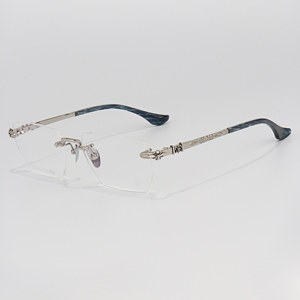
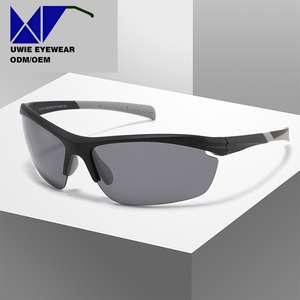
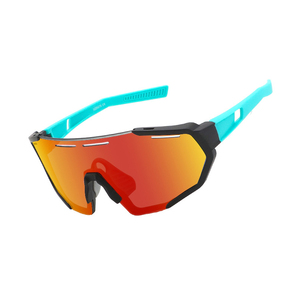

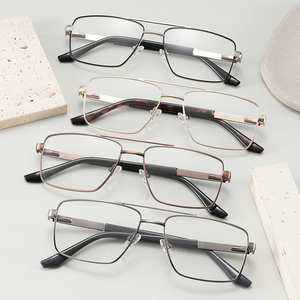
1. The Anthropometric Foundation of Asian Fit (Low Bridge Fit) Engineering
In modern ophthalmic dispensing and retail merchandising, standard frames designed around Northern European cephalometric averages frequently fail Asian and low-bridge demographics. Common complaints include frame slippage along the nasal dorsum, direct lens-to-cheek contact caused by excessive pantoscopic tilt, and temple pinch against the temporal cranium. Precision Asian Fit—increasingly termed "Universal Low Bridge Fit" in global markets—is not merely an aesthetic modification; it is an exact mechanical recalibration of optical geometry.
When curating collections for international distribution, B2B buyers must evaluate frame tooling against six critical biomechanical criteria:
Elevated Pad Arm Geometry
Standard bridges sit flush or have shallow pad arms. Asian fit frames utilize longer, step-down goose-neck pad arms with broadened mounting boxes to raise the frame vertex distance by 2.0mm to 3.5mm above flatter nasal crests.
Reduced Pantoscopic Angle
Traditional Western frames feature a 10° to 12° forward pantoscopic tilt. Asian fit designs decrease this inclination to 4° to 7°, preventing the lower eyewire orbit from resting on prominent zygomatic cheek arches during facial movement.
Flatter Frontal Curvature
A standard 6-base or 8-base frame wrap creates peripheral eyelash rub and focal distortion for flatter facial profiles. Asian fit engineering employs reduced base curves (Base 3 to Base 4.5) to keep lenses parallel to the ocular plane.
Calibrated Splay & Frontal Angle
Nose pads are angled with a tighter splay (25°–30°) and specialized frontal inclination to disperse weight over a broader surface area of soft tissue, preventing ischemic pressure marks and chronic downward shifting.
Cranial Bowed Temples
To accommodate wider temporal skull diameters without pinching, temples feature outward lateral bowing right at the endpiece, transitioning back into an ergonomic occipital hook that secures the frame without temple pressure.
2. Engineering Benchmark: Asian Fit vs. Standard Western Fit Specifications
Procurement officers evaluating OEM/ODM samples from Chinese manufacturing lines should cross-examine production prototypes against standardized anthropometric benchmarks to verify true low-bridge compliance.
| Anatomical Parameter | Standard Western Fit | Engineered Asian (Low Bridge) Fit | Dispensing Impact / Clinical Benefit |
|---|---|---|---|
| Bridge Width (DBL) | 18mm – 21mm | 15mm – 17mm (or built-up acetate) | Prevents frame slipping down flat nasal crests; maintains optical center. |
| Pantoscopic Angle | 10° – 12° forward tilt | 4° – 7° reduced tilt | Eliminates cheek indentations and frame shifting during smiling/speech. |
| Frontal Face Form Wrap | Base 5.5 to Base 7.0 | Base 3.0 to Base 4.5 | Prevents peripheral temporal eyewire rub; eliminates progressive lens aberration. |
| Vertex Distance | 10mm – 12mm | 12mm – 14mm | Ensures eyelashes clear back-surface anti-reflective coatings. |
| Nose Pad Projection | Standard flush / 4mm offset | Extended 6.5mm – 8.5mm offset | Secures grip on lower nasal bridges via soft medical-grade silicone. |
3. China Eyewear Manufacturing Hubs: Regional Specialization & Export Clusters
Sourcing Asian fit eyewear from China requires nuanced knowledge of regional industrial geography. China produces over 70% of the world's optical frames, yet manufacturing specialization is heavily segregated across four distinct provinces:
Shenzhen (Henggang / Longgang)
Primary Competence: High-end CNC Acetate & Pure Beta-Titanium.
The epicenter of luxury global eyewear. Shenzhen factories boast computerized milling tolerances within ±0.05mm, superior multi-layer cellulose acetate tumbling, and advanced electroplating for premium optical brands.
Wenzhou (Ouhai District)
Primary Competence: Mid-to-High Volume Metal & Optical Acetate.
Wenzhou excels in cost-efficient, highly automated mid-tier eyewear production. It is renowned for rapid tooling turnaround, spring hinge development, and extensive ODM collections optimized for competitive B2B programs.
Danyang (Jiangsu Province)
Primary Competence: Ophthalmic Lenses & Mass-Market TR90.
The optical lens capital of the world. Danyang is ideal for fully glazed reading glasses, injection-molded memory plastics (TR90), and fast-turn stock ready for large-scale retail distribution.
Xiamen (Fujian Province)
Primary Competence: Sport Performance Eyewear & Polarized Sun.
Leading global supplier of cycling shields, wrap-around polarized sports eyewear, and ballistic protective goggles, offering advanced polycarbonate decentration and UV400 co-extrusion technology.
4. Future Procurement Trends: The Next Horizon in Asian Fit Manufacturing
As consumer awareness of optical ergonomics expands beyond East Asia into multi-ethnic Western metropolitan areas, procurement strategies are shifting dramatically. Key trends transforming the sector over the 2026–2030 procurement cycles include:
AI-Driven Parametric Sizing & 3D Scan Ingestion
Chinese tier-1 suppliers are integrating 3D facial scan datasets directly into CAD/CAM production lines. This allows brands to order micro-segmented production batches tailored specifically to precise regional craniofacial archetypes.
Bio-Acetate & Circular Monomer Adoption
Strict European and North American ESG regulations have accelerated the replacement of traditional diethyl phthalate plasticizers with bio-based, biodegradable cellulose acetates derived from FSC-certified wood pulp and cotton lint.
Smart AR/Audio Asian Fit Geometries
The integration of micro-speakers, batteries, and heads-up display prisms requires heavier frame chassis. Chinese export manufacturers are pioneering balanced counter-weighted Asian fit temple designs that keep smart frames stable without slipping.
5. Quality Assurance Protocols, Testing Benchmarks & International Compliance
Importing ophthalmic and sunwear products mandates rigorous adherence to target-market medical device directives and optical safety standards. Professional exporters operate comprehensive in-house mechanical testing labs covering the following standard operating procedures:
1. Mechanical Endurance Testing (ISO 12870:2016): Frames undergo 500 complete open-close hinge flex cycles at 40 cycles/minute to confirm zero deformation or screw backing. For spring hinges, internal micro-springs must maintain tension without binding.
2. Nickel Release Verification (EN 16128 / REACH Annex XVII): Direct and prolonged skin-contact metal components (bridges, rim wires, pad arms) are tested via abrasive tumbling followed by 28-day artificial sweat immersion, ensuring nickel release remains strictly below 0.5 μg/cm²/week.
3. Accelerated Sweat & Corrosion Resistance: Frames are immersed in artificial sweat (pH 4.5) for 24 hours at 35°C to detect any electroplating bubbling, delamination, or discoloration across weld joints and solder points.
4. Lens Retention & Polarizing Efficiency: Sunglasses are certified under ANSI Z80.3 (US), EN ISO 12312-1 (EU), and AS/NZS 1067 (Australia), requiring UV400 spectrum cut-off (280nm–400nm) and polarizing efficiency greater than 99% for driving and marine safety.
US Optical Heritage Combined with Direct Chinese Precision Manufacturing
We bridge the gap between Western optical standards and China's elite manufacturing infrastructure. Rooted in more than 75 years of optical industry experience originating from St. Cloud, Minnesota, our global distribution model gives buyers complete supply security, uncompromising quality assurance, and seamless logistics.
75+ Years Optical Heritage
Our curation and technical dispensing knowledge stem from multi-generational ophthalmic laboratory leadership, ensuring every bridge, hinge, and eyewire meets clinical standards.
Dual Hub Logistics Model
Benefit from direct container-load export rates out of Ningbo and Shenzhen, paired with US-based buffer warehouses in Minnesota for low-MOQ reorders and urgent seasonal top-ups.
19 Curated Proprietary Lines
Access 447+ active designs across specialized collections like Wide Guyz, Executive Titanium, K Flex, and Rize Polarized—all engineered with tailored low-bridge fit variants.
Zero-Defect Audit Rigor
Every production run passes multi-stage optical inspections: raw material spectrometry, optical axis alignment, dimensional pad arm validation, and drop-ball impact compliance.
6. Frequently Asked Questions (FAQ) for B2B Importers & Eyecare Professionals
What distinguishes an authentic Asian Fit frame from a standard Western frame? +
What are the typical Minimum Order Quantities (MOQs) for custom OEM Asian fit optical frames? +
Can acetate frames be modified for Asian Fit without re-tooling entire molds? +
What international testing certifications accompany shipments to the US and EU? +
How do you manage quality control and prevent batch inconsistency? +
What are your production and export lead times for volume purchase orders? +
Ready to Build a High-Margin Low Bridge Fit Assortment?
Connect directly with our senior optical specialists to request wholesale line sheets, private-label prototyping, or physical evaluation samples for your optical practice or retail chain.
Get a Quote