
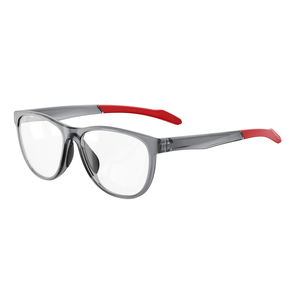
Featured Ultem & High-Performance Optical Inventory
Engineered to exceed FDA medical compliance, ANSI Z80.5-2019 ophthalmic standards, and CE ISO 12870 criteria. Explore benchmark frames calibrated for optical practices and wholesale labs worldwide.
75+
Years Industry Heritage
447+
Active Wholesale Styles
8.5g
Ultra-Light Average Chassis
100%
Medical PEI Polymer Base
Engineering Whitepaper: Why Ultem (PEI) Defines Modern Ophthalmic Manufacturing
In modern ophthalmic material science, Polyetherimide (PEI)—popularly commercialized under the trade name Ultem™—represents a transformative leap in optical chassis engineering. Originally developed by SABIC for high-stress aerospace and FDA-class surgical instrument applications, Ultem delivers a unique combination of extreme thermal stability, dimensional inertia, mechanical shape memory, and an exceptional strength-to-weight ratio.
Unlike conventional cellulose acetate or standard TR90 polyamide polymers, Ultem retains its molecular cohesion and tensile resilience under broad thermal fluctuations (-30°C to over 170°C). For optical laboratories, opticians, and eyewear brands, this means frames will not warp during heat-assisted glazing, lens groove geometries remain stable over years of usage, and bridges resist cold creep deformation. When evaluating top-tier manufacturing partners, mastering the micro-injection processing parameters of high-viscosity PEI is the ultimate benchmark of factory competency.
| Material Engineering Property | Ultem (PEI - Polyetherimide) | TR90 (Grilamid Polyamide) | Cellulose Acetate | Beta Titanium |
|---|---|---|---|---|
| Specific Density (g/cm³) | 1.27 - 1.28 (Featherweight) | 1.14 - 1.18 | 1.28 - 1.32 | 4.40 - 4.50 |
| Flexural Modulus (Elasticity) | 3,300 MPa (Superior Memory) | 1,200 - 1,600 MPa | 1,800 - 2,400 MPa | 105,000 MPa (Rigid) |
| Heat Deflection Temp (HDT @ 0.45MPa) | 200°C - 210°C (No Warping) | 100°C - 130°C | 65°C - 75°C | > 500°C |
| Biocompatibility / Skin Reactivity | ISO 10993 Certified / Inert | Inert / Hypoallergenic | Plasticizer leaching possible | Hypoallergenic |
| Groove Precision Retention | Micron-level stability (±0.02mm) | Moderate creep over time | Subject to thermal shrinkage | High machining accuracy |
Evaluating Top 10 Ultem Frame Manufacturers: The B2B Audit Framework
Procurement managers and supply chain directors must evaluate manufacturing facilities based on empirical capabilities rather than superficial catalog photos. Here are the six technical benchmarks our auditing engineers evaluate when qualifying global tier-1 Ultem eyewear factories.
1. Virgin SABIC PEI Resin Verification
Top-tier factories run genuine SABIC Ultem resin without regrind adulteration. Reground scrap drops impact resistance by up to 40% and leads to micro-voids in bridge structures. Verified plants provide continuous Melt Flow Index (MFI) telemetry and raw material batch inspection documentation.
2. Micro-Injection Hydraulic Pressure Control
Because Ultem melts at higher temperatures (340°C - 380°C), molds must use hardened tool steel (HRC 52+) with internal oil-heating channels. Premier plants utilize closed-loop electric Japanese or German molding machines (such as Fanuc, Sumitomo, or Arburg) ensuring sub-micron consistency across fine eyewires.
3. Neodymium Magnetic Clip Integration
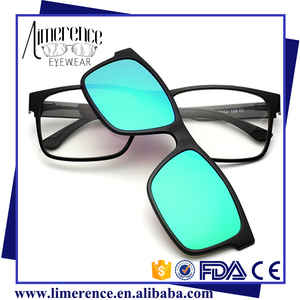
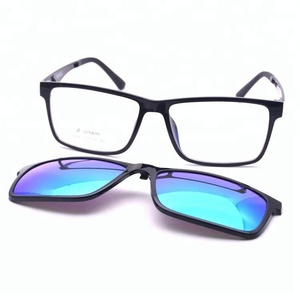
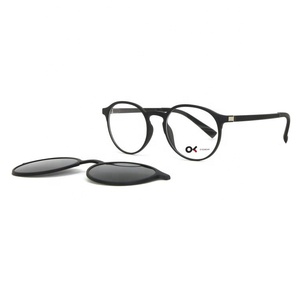
For modular 2-in-1 and 3-in-1 frames, factory evaluation must inspect the magnet installation. Benchmark manufacturers employ N52-grade high-remanence Neodymium-Iron-Boron magnets sealed via ultrasonic welding, preventing loose magnets or corrosion from sweat exposure.
4. Surface Adhesion & Eco-Coatings
Due to PEI's chemical inertness, standard lacquers can flake without proper pre-treatment. Reliable manufacturers apply ionized plasma surface activation, followed by multi-stage thermal-cured polyurethane coatings or physical vapor deposition (PVD) to deliver 48-hour sweat and solvent test survival.
5. Screwless & Micro-Hinge Machining
The structural hinge interface represents the primary wear failure point. Leading facilities offer custom-engineered screwless barrel hinges, rotating pivot blocks, and spring-assisted beta-titanium hybrid joints tested to exceed 50,000 open-close mechanical cycles without tension loss.
6. Lens Grooving & Cold Glazing Calibration
A quality control team must verify the V-bevel depth and eyewire cross-section. Quality-focused manufacturers construct lens bevels engineered at 110° included angles with uniform depth tolerances, allowing opticians to cold-snap lenses in without applying dangerous frame heaters.
Future Procurement Trends: Ultem Eyewear (2025–2030)
As the global eyewear market shifts away from heavy traditional materials toward ergonomic, everyday solutions, optical purchasing managers are updating their frame board planning strategies. Here are the core procurement vectors shaping global factory output:
Material Synergy
PEI-Titanium Hybrid Co-Molding
B2B buyers are focusing on hybrid frames: an ultra-thin Ultem front rim paired with surgical beta-titanium temples. This design combines featherweight bridge support with adjustable, cold-bendable temple comfort.
Multi-Functionality
Magnetic Modular Eyewear Systems
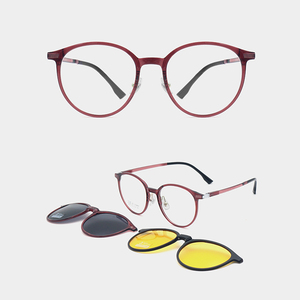
Consumer interest in 2-in-1, 3-in-1, and 5-in-1 interchangeable optical systems is growing. Integrated TAC polarized, yellow night-driving, and anti-glare blue-light shields allow retailers to provide multiple optical options in a single SKU.
Demographics
Pediatric & Extended-Fit Expansion
Ultem's high yield strength and memory make it ideal for active youth and wide-fit sizing. Frame buyers are adding flexible, durable lines to reduce in-clinic adjustments, frame returns, and repair requests.
Supply Chain Authority
Built on 75+ Years of Ophthalmic Expertise
Headquartered in St. Cloud, Minnesota, Global Optique provides full-service eyewear design, curated collection assembly, and international B2B wholesale distribution. We bridge precision manufacturing with the practical dispensing needs of independent optometry practices, commercial optical chains, and global distributors.
Across our 19 specialized collections—including titanium, pediatric, flexible, wide-bridge, and magnetic clip-on designs—our assortments are engineered for quick turns, reliable lab glazing, and patient satisfaction.
US-Managed Distribution
Fast shipping, direct support, and consolidated logistics managed from St. Cloud, MN.
Rigorous Quality Control
Multi-point testing covering hinge tension, lens fit, and material durability before dispatch.
Curated Style Lines
447+ current styles across 19 brands suited for diverse facial profiles and patient demographics.
Direct Partner Support
Knowledgeable account reps supporting board assortment planning and custom reorders.

Frequently Asked Questions: B2B Ultem Sourcing
Key considerations for optical lab directors, supply chain managers, and retail procurement teams.
How does Ultem (PEI) perform during prescription lens edging and insertion?
Ultem exhibits high dimensional stability and a heat deflection point exceeding 200°C. As a result, optical labs can cold-insert bevel-cut lenses without heating the frame rims, helping to avoid uneven heating shrinkage and coating damage. When heated adjustments are required, Ultem maintains shape memory without drying out or releasing the plasticizers common in traditional acetate.
What is the typical minimum order quantity (MOQ) for custom OEM Ultem frames?
For custom molds requiring dedicated high-pressure injection tooling, production runs generally start at 300 to 500 units per colorway. However, verified practices and distribution partners working with Global Optique can access our ready-to-ship US stock inventory with lower minimum commitments, supporting steady testing and regional replenishment.
Are Ultem frames suitable for high-index and strong astigmatism prescriptions?
Yes. Thanks to its flexural modulus (3300 MPa), thin Ultem rims support heavier high-minus lenses without bowing outwards or losing lens retention. This structural integrity maintains proper pantoscopic tilt and vertex distance for modern digital free-form lenses.
How do magnetic clip-on assemblies perform over prolonged daily use?
Our clip-on systems use encased N52 Neodymium magnets positioned to create secure lateral hold without interfering with the chassis aesthetic. Polarized TAC sun lenses match the base curvature of the frame, minimizing friction against primary prescription lenses and avoiding scratching during attachment.
How can international optical retailers establish a wholesale partnership?
International practices and wholesale distributors can register online or connect with our account team. We handle export documentation, assortment planning, and direct carrier logistics from our distribution hub in Minnesota, USA.
Request Assortment Catalogs & Factory Specifications
Connect with our US-based account team to review our full wholesale catalog, request material compliance files, or discuss customized OEM/ODM programs for your practice or distribution network.
Toll-Free Phone: (800) 297-2332 | Direct Inquiries: [email protected]