
Leading Contract Manufacturing for High-Performance Rx Sports Eyewear
Combining over 75 years of optical distribution authority rooted in St. Cloud, Minnesota, with automated OEM/ODM cleanroom injection molding, our enterprise delivers high-performance sports protective goggles engineered for optical lab compliance, superior ballistic safety, and dynamic wearer comfort.
ASTM F803 Impact Ballistics
Every prescription sports frame chassis is engineered to endure high-velocity projectile impacts from squash, baseball, soccer, and basketball. Our specialized virgin polycarbonate (PC) and TR90 polymer matrix formulations eliminate shatter hazards and facial lacerations during extreme mechanical stresses.
Direct Wrap & Optical Rx Inserts
Overcoming peripheral prismatic aberrations in high-curvature sports frames (Base 6 to Base 8) through state-of-the-art 5-axis Freeform digital surfacing compensation. We support both direct-glazed ophthalmic grooving and detachable clip-in prescription carrier systems accommodating diopters from -8.00 to +4.00.
OEM/ODM Tooling & Rapid Prototyping
From 3D CAD stress-simulation (FEA) to precision CNC mold EDM tooling within 28 days. We provide comprehensive private-label branding, customized silicone overmolding, anti-allergenic bridge padding, adjustable elastic headband co-molding, and full optical lab test documentation.
Verified Production Eyewear & Sports Frame Platforms
Explore our production-ready platforms adaptable for bespoke OEM/ODM custom branding, customized prescription glazing, and specialized anti-fog optical lens treatments.
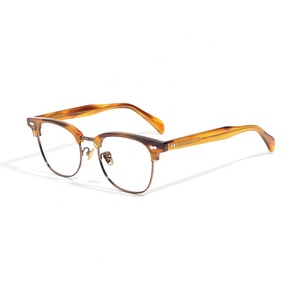
- Material: Pure Plate / TR Hybrid
- Rx Compatibility: Direct Freeform Glaze
- Target Use: Executive Active Casual
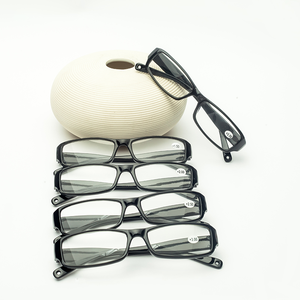
- Material: Impact Polycarbonate
- Rx Adaptability: Full Single Vision / Bi
- Standard: CE & ISO 12870
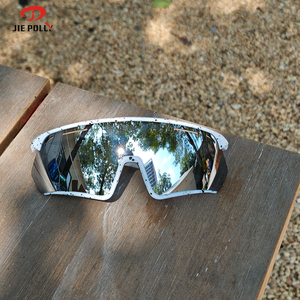
- Lens Function: UV Photochromic + Rx Adapter
- Ventilation: Dual Dynamic Air-Vents
- Coating: Hydrophobic & Oleophobic
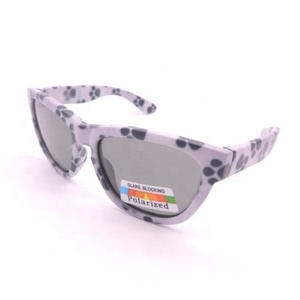
- Chassis: Bendable TPEE / Rubber
- Safety Standard: ASTM F803 Youth Impact
- Optics: TAC Polarized / Rx Groovable
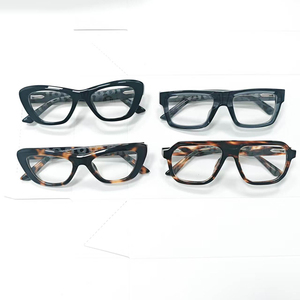
- Frame Profile: High-Density Cellulose Acetate
- Hinge: Reinforced 5-Barrel Steel
- Base Curve: Base 4 / High-Cyl Compatible
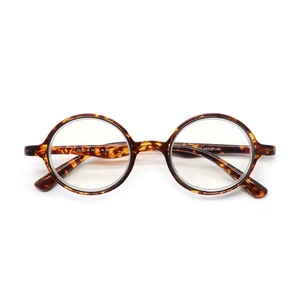
- Density: Ultralight 14g Weight
- Flexibility: High Thermal Memory Retention
- Nose Rest: Ergonomic Integrated Arch
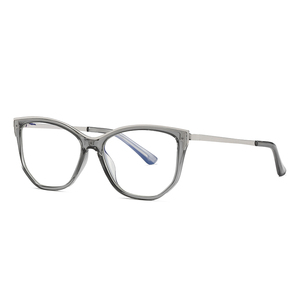
- Optical Depth: Progressive / Multifocal Ready
- Transparency: 92% Crystal Polyamide
- Chemical Stability: Sweat & Cosmetic Resistant
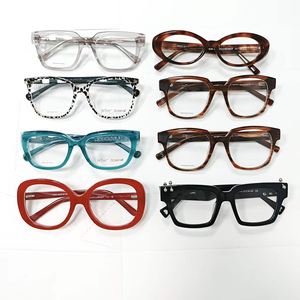
- Profile: 8.0mm Heavy Bevel Milling
- Core Wire: Custom Engraved Steel Core
- Branding: OEM Hot Foil & Laser Etch
Prescription Sports Goggles Engineering: Ballistic Mechanics & Optical Realignment
A comprehensive technical breakdown for optical lab directors, optometrists, and OEM eyewear procurement managers detailing lens decentration physics, impact absorption elastomeric bridges, and thermal anti-fog mitigation.
1. The Biomechanical Imperative: ASTM F803 vs. Industrial ANSI Z87.1
Standard ophthalmic frames and industrial safety spectacles fail catastrophically when subjected to the dynamic, blunt-force impacts typical of racket sports, basketball, and contact athletics. While ANSI Z87.1 evaluates high-mass and high-velocity steel ball drops (1-inch steel ball dropped from 50 inches), ASTM F803 specifies stringent projectile testing utilizing high-velocity sporting equipment—such as squash balls propelled at 90 miles per hour (145 km/h) and baseballs at 40 to 60 mph directly at 8 distinct angles of incidence.
Under ASTM F803 protocols, any frame deflection that permits contact between the inner lens surface and the ocular orbit of the standardized Alderson 50th percentile headform results in immediate test failure. Furthermore, no displacement of the eyewire retention bevel or lens dislodgment is permitted. To conquer these mechanical extremes, our factory employs TR90 (Grilamid EMS) frames co-molded with medical-grade thermoplastic elastomer (TPE) shock pads that disperse kinetic impact vectors evenly across the zygomatic arch and nasal frontal process, safely bypassing the vulnerable ocular globe.
| Testing Standard | Projectile Type | Impact Velocity | Permitted Ocular Contact | Primary Application |
|---|---|---|---|---|
| ASTM F803-19 | Racketball / Squash / Lacrosse / Baseball | 40 to 90 mph (Dynamic) | 0.00 mm (Zero Tolerance) | Prescription Sports Eyewear |
| ANSI Z87.1+ | 0.25-inch Steel Ball / 500g High Mass Pointed | 150 ft/s (45.7 m/s) | Lens fracture prohibited | Industrial Workplace Safety |
| EN 166 (Grade F/B) | 6mm Steel Ball Projectile | 45 m/s to 120 m/s | No eye-contact / No shatter | European Mechanical Sport/Work |
| MIL-PRF-32432A | 0.15 Caliber Shaped Fragment | 640 to 660 ft/s (195 m/s) | Spall and structural integrity verified | Tactical / Ballistic Military Rx |
2. Overcoming Curvature Physics: Optical Compensation for High Wrap (Base 6 & Base 8) Frames
A persistent challenge for independent optometrists and eyewear dispensers is dispensing prescriptions into wraparound athletic goggles. Traditional flat lenses conform to a Base 2 to Base 4 curve. Sports goggles, however, employ Base 6 to Base 8 chassis architectures to provide peripheral protection and unobstructed lateral vision fields.
When an uncompensated standard ophthalmic prescription lens is inserted into a curved wrap frame, it introduces significant induced prismatic tilt, oblique astigmatism, and mean spherical power errors. For example, a patient with a nominal prescription of -4.00 D sphere can experience up to 0.75 D of unwanted astigmatism and 0.8 prism diopters of base-out distortion at the peripheral glance, resulting in acute asthenopia, headache, and severe spatial miscalculation during competitive sports.
Our OEM optical processing incorporates Ray-Tracing Freeform Digital Surfacing Algorithms. By factoring in the client frame's specific pantoscopic tilt (typically 4° to 8°), wrap angle (typically 12° to 18°), and vertex distance (calibrated at 11mm to 13mm), our proprietary lens generator surfaces a dynamic, non-spherical toroidal back-surface profile. This ensures that the athlete perceives zero peripheral distortion, sharp focal contrast, and precise motion tracking.
3. Thermodynamic Venting & Dual-Action Hydrophilic Anti-Fog Technology
During intense athletic exertion, intra-eyewear microclimates rapidly reach 95% relative humidity and temperatures exceeding 34°C, meeting cooler external atmospheric conditions that trigger instant water vapor condensation (fogging). Conventional silicone anti-fog wipes provide transient surface wetting that washes away under heavy sweat.
Our advanced sports goggles integrate dual-action thermodynamic mitigation:
- Venturi Effect Channeling: Aerodynamically contoured brow and under-orbital intake vents accelerate cool airflow across the inner lens surface without allowing dust, perspiration, or projectiles to enter.
- Permanent Cross-Linked Hydrophilic Surfacing: During cleanroom dip coating, an organic-inorganic polysiloxane nanolayer is molecularly bound to the substrate. Rather than forming light-scattering micro-droplets, condensation spreads into an optically transparent, uniform liquid sheet that maintains instantaneous optical clarity.
Prescription Sports Goggles: 2025–2030 Global Sourcing Trends
Key industry shifts transforming inventory strategies for optical chains, private practices, and sports equipment distributors worldwide.
Modular Convertible Hybrid Systems
Buyers are moving away from dedicated static goggles toward hybrid chassis featuring interchangeable quick-release temples and elastic sport headbands. This modular design lowers SKU inventory burdens by 40% while empowering consumers to seamlessly transition from active lifestyle sunglasses to ASTM-compliant court goggles.
Sustainable Bio-Polymer Resins (Bio-TR90)
Global regulatory pressure and consumer demand for eco-certified products are driving OEM investments in plant-derived castor oil polyamides. Bio-TR90 delivers identical flexural memory modulus, chemical resistance to skin perspiration, and high shatter tolerance with a 50% lower cradle-to-gate carbon footprint.
Smart Electrochromic & Sensor Integration
The next frontier merges rapid-response liquid crystal (LC) tint adjustment responding within 0.1 seconds to shifting sunlight conditions during trail running and alpine sports. Integrated micro-sensors embedded in nosepads will capture biometric metrics while maintaining strict optical impact boundaries.
Frequently Asked Questions for Optical Wholesalers & Brands
Authoritative answers on minimum order quantities, customization parameters, laboratory certifications, and international shipping protocols.
What is the typical OEM/ODM tooling lead time and MOQ?
For existing mold platforms, our standard production Minimum Order Quantity (MOQ) begins at 300 to 500 units per colorway. For bespoke OEM/ODM injection molds, the comprehensive tooling cycle takes 25 to 35 business days, including 3D prototyping, steel mold EDM CNC fabrication, initial T1 shot samples, and mechanical impact qualification.
How are high astigmatism and high cylinder prescriptions accommodated?
We provide two engineering avenues: For cylinders exceeding -2.00 D or total sphere powers outside -6.00 D to +4.00 D where direct wraparound glazing creates excessive edge thickness, we recommend our optical insert sub-carrier system. This positions a standard Base 4 prescription carrier behind the high-wrap impact lens shield.
Can you provide customized packaging, private labeling, and strap weaving?
Yes. We offer end-to-end turnkey OEM customization: Jacquard woven silicone-backed anti-slip elastic headbands, pad printed or laser etched temple branding, customized EVA hard zipper storage cases, micro-fiber lens cleaning pouches, and retail barcode packaging fully compliant with GS1 international standards.
What quality certifications are supplied with wholesale shipments?
Shipments can be accompanied by comprehensive third-party lab documentation including ASTM F803 impact test reports, ANSI Z87.1-2020 verification, CE declaration of conformity (EU 2016/425 Personal Protective Equipment), ISO 12312-1 sunglasses standards, and FDA medical device establishment registrations.
What optical coatings are available on your plano shield lenses?
Our standard production options encompass military-grade dual-surface anti-fog coatings, diamond-hard polysiloxane anti-scratch hard coatings (passing Bayer abrasion tests > 4.5), hydrophobic/oleophobic multi-layer blue vacuum AR coatings, and flash dielectric mirror coatings in silver, red, blue, and gold tints.
How does your St. Cloud, Minnesota heritage benefit overseas buyers?
Rooted in more than 75 years of optical industry experience in St. Cloud, Minnesota, our management team understands the rigorous dispensing requirements of independent eye doctors and optical retailers. We bridge US ophthalmic quality control with cost-effective, high-volume automated manufacturing.
Accelerate Your Performance Eyewear Sourcing
Connect with our technical engineering team to request sample prototypes, review CAD mold drawings, or obtain complete wholesale price lists for our ASTM F803 certified sports frames.