
Featured OEM/ODM Production Models
Engineered for clinical prescription glazing stability, all-day ergonomic equilibrium, and distinctive retail shelf appeal.
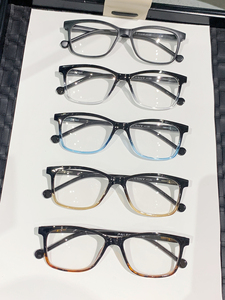
- Material: Dual-Layer Polycarbonate
- Rx Compatibility: +1.00 to +4.00
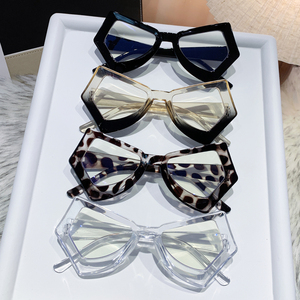
- Material: High-Grade Optical Polymer
- Hinge: Reinforced Wire-Core Temple
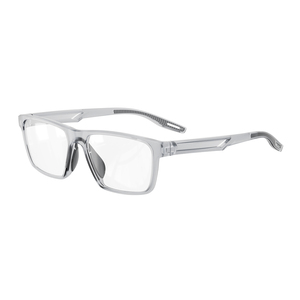
- Material: Memory TR90 & Elastomer
- Standard: ANSI Z87.1 High-Velocity
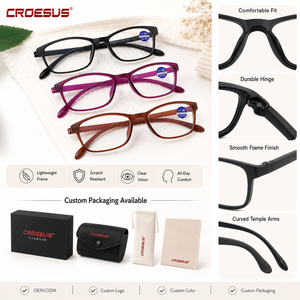
- Material: Ultra-Lightweight Monomer
- Lens: 420nm HEV Blue Cut Shield
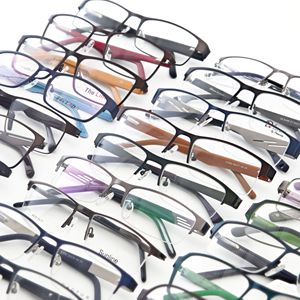
- Material: Stainless Alloy + Acetate Tips
- Plating: Nickel-Free IP Vacuum Finish
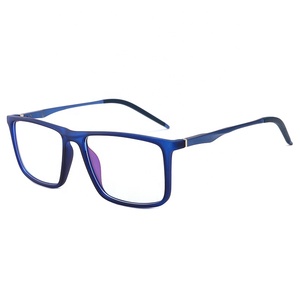
- Material: Swiss EMS Grilamid TR90
- Groove: High-B Base Curve Stable
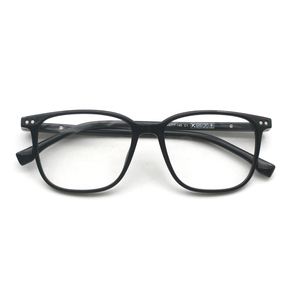
- Material: Aerospace-Grade Ultem (PEI)
- Clip: Category 3 TAC Polarized UV400
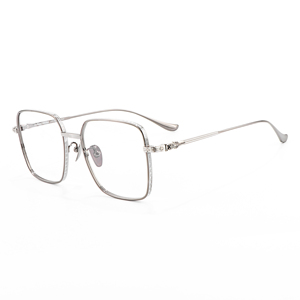
- Material: Japanese Pure Beta-Titanium
- Weight: < 9.4g Featherweight Core
A Global Eyewear Powerhouse Built on Optical Precision
Combining Midwestern American distribution integrity with multi-axis CNC micro-machining and robotic clean-room manufacturing. We serve over 1,200 independent optometric clinics, retail optical networks, and private-label boutique distributors globally.
US Distribution & Global Logistical Hub
Originating from St. Cloud, Minnesota, our global delivery matrix pairs localized stocking buffers with direct-from-factory FOB/CIF ocean and air express logistics. We eliminate lead-time fragility, offering rapid EDI fulfillment and split-shipment options across North America, the EU, and APAC.
Comprehensive 19-Collection Portfolio
From high-velocity industrial safety (armouRx) and extended bridge ergonomics (Wide Guyz) to licensed pediatric lines (Dr. Seuss, Kidz Eyez, Tots) and luxury Japanese Beta-Titanium (Executive Titanium, Kishimoto), our catalog of 447+ active frame architectures solves SKU fragmentation for practice buyers.
Clinical-Grade Optical Compliance
Every production batch undergoes 100% mechanical cycling and optical dimensional checks: 20,000-cycle spring-hinge fatigue tests, 72-hour salt-spray corrosion resistance, cross-hatch coating adhesion checks, and bevel groove depth profiling to prevent lens popping during high-minus prescription edging.
Materials Science & Tolerancing in Modern Eyewear Manufacturing
Understanding the mechanical tradeoffs between polymers, super-elastic memory alloys, and cellulosic acetates is critical for optical lab yields and minimizing patient return rates.
Optical frame manufacturing has moved far beyond rudimentary sheet punching and manual tumbler polishing. Contemporary ophthalmic dispensing requires micron-level consistency across the eye-wire groove profile. When an in-office edger cuts high-index 1.67 or 1.74 progressive lenses, an erratic lens bevel shelf creates localized circumferential tension, leading to birefringence (optical wave aberration), premature lens crazing, or slippage under thermal swings.
Our OEM/ODM manufacturing protocols employ five-axis CNC milling centers operating with a linear repeatability of ±0.015mm, guaranteeing that the pantoscopic angle (7° to 11°) and face-form wrap match optical lab tracings seamlessly. Below is an engineering comparison matrix designed for wholesale purchasing directors:
| Substrate Material | Tensile Yield (MPa) | Density (g/cm³) | Cold Glazing Capacity | Hypoallergenic Index | Primary Commercial Utility |
|---|---|---|---|---|---|
| Beta-Titanium (Ti-15V-3Cr-3Sn-3Al) | 980 – 1150 | 4.75 | Excellent (Super-elastic memory) | 100% Bio-inert (ISO 10993) | Ultra-minimalist rimless & flexible executive bridges |
| Swiss EMS Grilamid TR90 | 85 – 110 | 1.01 | Moderate (Requires controlled heat) | High (Food-contact certified) | Activewear, pediatric lines, and unibody safety frames |
| Mazzucchelli Bio-Acetate (CA) | 60 – 85 | 1.28 | Superior (Optimal thermo-forming) | High (Organic plasticizer) | Boutique color depth, luxury beveling, vintage hand-craft |
| Polyetherimide (Ultem / PEI) | 105 – 120 | 1.27 | Fair (High structural rigidity) | 100% Inert (Aerospace grade) | Ultra-thin magnetic sun clip chassis & featherweight reading |
| Corrosion-Resistant Monel Alloy | 480 – 620 | 8.80 | Good (Cold bendable for fitting) | Requires Passivated IP Barrier | Intricate filigree work, double-bridge navigators, retro classics |
Surface Finish Integrity: PVD Vacuum Sputtering vs. Traditional Wet Plating
For boutique eyewear brands, galvanic failure (surface bubbling, green oxidization at temple hinges, and skin dermatitis) accounts for over 65% of post-sale warranty claims. Traditional wet electroplating leaves microscopic pinholes due to surface hydrogen evolution.
Our manufacturing plants utilize clean-room Physical Vapor Deposition (PVD) magnetron sputtering in high-vacuum chambers. By depositing titanium nitride (TiN) or diamond-like carbon (DLC) coatings at atomic thicknesses of 0.8µm to 1.5µm, our boutique frames achieve a hardness of 2,200 Vickers. This process guarantees complete resistance to human perspiration, cosmetic alcohols, and saline environments, ensuring that private label collections retain their satin or high-luster finishes over years of daily wear.
Boutique Eyewear Sourcing Trends (2025–2030)
Strategic inventory planning requires anticipatory design. These four structural developments are reshaping optical purchasing quotas across the globe.
Bio-Circular & Phthalate-Free Polymers
European and North American regulatory mandates (EU REACH revision and US State Chemical restrictions) are penalizing petroleum-based diethyl phthalate (DEP) plasticizers. Forward-looking buyers are shifting orders toward plant-origin bio-acetate (70%+ certified organic cellulose from sustainably managed forests) and renewable castor-oil TR-polymers that compost without toxic micro-plastics.
Anatomical Multi-Bridge & Universal Fit Geometries
The traditional binary classification of "Western Fit" and "Asian Fit" is obsolete. High-performance retail boards now demand modular nose pad architectures and splayed pantoscopic angles that accommodate broader nasal dorsums, shallow bridges, and elevated zygomatic arches. Our Wide Guyz and pediatric segments incorporate dynamic ergonomics that lower dispensing adjustment times by up to 40%.
Hybrid Multi-Material Co-Molding
Monolithic acetate frames are giving way to high-modulus hybrid constructions: stainless steel chassis enveloped in ultra-thin acetate rims, or Japanese titanium eyewires seamlessly laser-welded to featherweight Ultem temple cores. These hybrid architectures satisfy the modern consumer desire for substantial visual presence without cranial pressure or nasal bridge fatigue.
Frequently Asked OEM/ODM Sourcing Questions
Direct, technical answers addressing minimum order volumes, tooling schedules, private-label branding protocols, and ophthalmic verification.
Q1 What are your standard Minimum Order Quantities (MOQ) for custom OEM production?
For ready-to-ship catalog styles from our 19 core collections, our MOQ is as low as 50 to 100 units across assorted SKUs. For complete custom OEM fabrication (bespoke acetate laminations, dedicated tooling, and unique metal stamping), standard MOQs start at 300 units per model (typically broken down into 100 units per colorway), ensuring optimal raw material yield and tooling amortization.
Q2 What is the standard development turnaround for rapid prototyping and 3D CAD modeling?
Upon receipt of hand sketches, physical samples, or 2D technical flats, our engineering team in Minnesota generates parametric 3D CAD drawings (STEP/IGES) within 48 to 72 business hours. SLA high-precision photopolymer 3D printed functional prototypes for ergonomic fit testing can be delivered within 7 business days, before steel injection or CNC tooling commitment.
Q3 How does your manufacturing facility guarantee high-minus Rx lens retention?
Lens retention failure is prevented through precise bevel control. Our CNC mills route the internal eyewire groove at an angle of 110°–115° with a uniform depth of 0.55mm ± 0.02mm. This geometry matches standard diamond wheel edgers, ensuring high-power prescription lenses up to -8.00 diopters seat rigidly without rim warping or optic distortion.
Q4 What private label branding and custom laser decoration options are available?
We offer fiber-laser inside-temple etching, high-definition pad printing, foil heat-stamping, epoxy-infilled temple logos, customized acetate core-wire embossing, and branded silicone/titanium nose pads. Packaging solutions including customized clamshell cases, microfiber cloths, and serialized barcodes can be produced in tandem.
Q5 What testing documentation is supplied for international customs clearance?
Shipments comply fully with the EU Medical Device Regulation (MDR 2017/745), US FDA 21 CFR 801.410 (Drop Ball Impact Test certification), and ISO 12870 ophthalmic optics requirements. We supply complete Certificates of Conformity (CoC), Nickel Release test reports (EN 16128), and full biocompatibility documentation with all export documentation.
Q6 Can your factory replicate discontinued legacy vintage or archival designs?
Yes. Using non-contact optical 3D coordinate measuring systems (CMM), we reverse-engineer vintage chassis, classic filigree metal temples, and antique hinge geometries to 10-micron accuracy. We modernize the metallurgical internal structure with Beta-titanium or spring-loaded stainless hinges while preserving the exterior aesthetic.
Q7 How do you control batch-to-batch color consistency in patterned acetates?
We partner with premier acetate producers such as Mazzucchelli 1849 and Jinyu, utilizing calibrated block-slicing and curing recipes. For tortoiseshell and horn patterns, we maintain master master-color plates under D65 standard illuminant conditions. Spectrophotometer checks guarantee color-delta variance remains under ΔE < 0.8 between manufacturing runs.
Q8 What are the lead times for repeat reorders versus virgin custom production?
Reorders utilizing existing molds and established acetate colors typically ship within 30 to 40 days. Virgin OEM production—involving custom stamping dies, new injection molds, laser etching jigs, and custom electroplating racks—operates on a 65 to 75-day delivery cycle from final engineering drawing sign-off.
Q9 How are safety frames (armouRx series) tested for ANSI and CSA compliance?
Our safety optical line conforms to ANSI Z87.1-2020 and CSA Z94.3 standards. Frames are subjected to high-mass impact tests (500g pointed projectile dropped from 127cm) and high-velocity impact tests (6.35mm steel ball fired at 45.7 m/s). No contact with the eye-form is permitted, ensuring worker protection in industrial prescription environments.
Q10 How do we initiate an evaluation sample order for frame board review?
You can request an evaluation assortment comprising representative adult, pediatric, titanium, and sports models from our current collections. Our commercial team assists in curating samples tailored to your demographic, with sample costs credited back toward your initial wholesale volume run.
Launch Your OEM/ODM Eyewear Line with Global Optique
Consult directly with our eyewear engineering and distribution directors. We analyze your CAD drawings, optimize bill-of-materials (BOM) costs, and supply uncompromised optical quality backed by over 75 years of proven heritage.