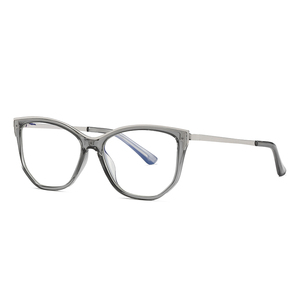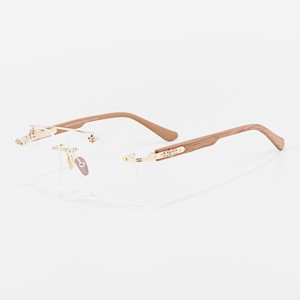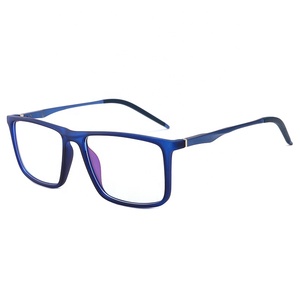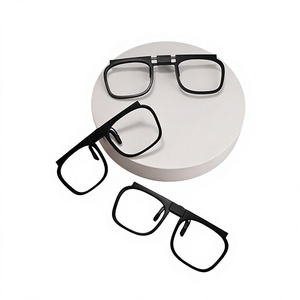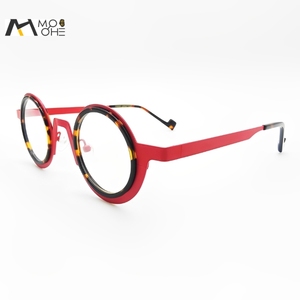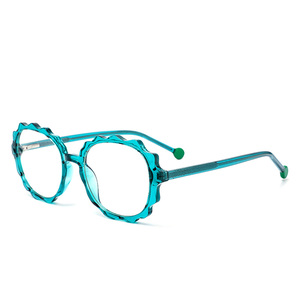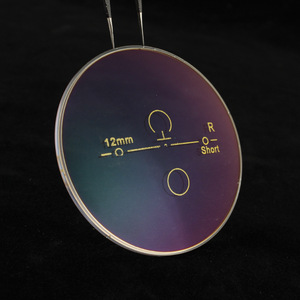
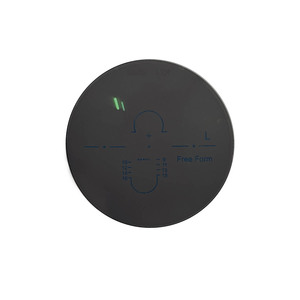
Custom OEM Progressive Lens Frames Manufacturers & Factories

Precision-Engineered Ophthalmic Optical Frames & Free-Form Lens Integration | 75+ Years US Heritage

Core OEM Manufacturing Matrix

Precision Progressive Eyewear & Multifocal Optical Frames

Explore our engineered progressive lens frames manufactured with exact vertex distance geometry, optimized pantoscopic tilt, and adaptive beveling for seamless digital free-form lens integration.

Engineering White Paper

Ophthalmic Frame Engineering for Digital Free-Form Corridors

A progressive addition lens (PAL) fails without absolute mechanical alignment. Unlike standard single-vision frames, OEM progressive lens frames require tight dimensional control over facial wrap, vertex distance, and pantoscopic inclination.

Corridor Depth & B-Dimension

We standardize a minimum B-dimension of 28mm to 36mm across our progressive collections. This preserves the reading corridor (14mm-18mm) and prevents edge cutoff of the near-vision segment during computer numerical control (CNC) edger sizing.

Pantoscopic Angle Stability

Our OEM cold-worked titanium and structural nickel-silver hinges lock pantoscopic tilt within the critical 8° to 12° threshold. This stabilizes astigmatic aberration across intermediate optical zones.

Toric Bevel Groove Milling

High-wrap and high-prescription progressive lenses experience base curve mismatch. Our CNC grooves feature a custom 110° to 120° variable bevel angle to prevent frame splay and cold-mount stress cracks.

Manufacturing Parameter Standard Frame Tolerance Global Optique OEM Precision Class Clinical Impact on Progressive Wearer
Pantoscopic Tilt Angle ± 3.5° Deviation ± 0.5° Controlled Inclination Eliminates peripheral blur and swim effect in dynamic motion.
Vertex Distance Variance 11mm - 16mm Uncalibrated 12.0mm ± 0.3mm Fixed Geometry Maintains focal point alignment with digital free-form lab designs.
Face Form Wrap (Frame Curve) Base 4 to Base 6 Unregulated Base 4.50 True-Calibrated Curve Minimizes unwanted oblique astigmatism across wider fields of view.
Bridge Torque Resistance 0.85 Nm Failure Point > 2.20 Nm Structural Elasticity Maintains pupillary distance (PD) when worn or taken off daily.
Industry Analysis & Forecast

Future Procurement Trends in Progressive Optical Manufacturing

The convergence of digital work habits, aging global demographics, and advanced ophthalmic lab software is shifting progressive eyewear sourcing. Here is how enterprise buyers should prepare their supply chains.

1. Growth of Workplace & Intermediate Corridors

Presbyopic screen users are moving away from traditional general-purpose PAL designs. Wholesale sourcing is shifting toward dedicated occupational frames designed for 40cm to 2m working distances with deeper lower rims.

2. High-Density Bio-Acetate & Beta-Titanium

Weight is a key cause of progressive frame slippage, which throws off the fitting cross. Modern buyers prioritize ultra-dense, ultra-thin acetates (down to 3.2mm) paired with Japan-grade Beta-Titanium temples for balance.

3. Automated Edger Data Integration (OMA Compliance)

Large chains and direct-to-consumer optical brands now require trace-ready CAD databases. Our factory provides full OMA/VCA compliant data files for every frame SKU, enabling automated lens edging without manual tracer calibration.

75+
Years of Optical Manufacturing Heritage
447+
Tooling-Ready Optical Frame Styles
19
Curated Functional Eyewear Collections
99.8%
Batch-to-Batch Optical Dimension Consistency
Manufacturing Infrastructure

Why Tier-1 Optical Distributors Rely on Global Optique

Headquartered in St. Cloud, Minnesota, Global Optique pairs over 75 years of optical industry experience with advanced OEM/ODM production lines. We help practices and private-label distributors minimize returns, protect optical tolerances, and scale reliable inventories.

Comprehensive Quality Assurance

Every progressive frame production run undergoes 100% mechanical qualification: hinge tension torque testing, 72-hour sweat resistance salt-spray tests, barrel polishing verification, and laser alignment audits before dispatch.

US-Managed Global Distribution

With corporate distribution managed out of Minnesota, USA, we provide clear documentation, stable supply chains, and fast fulfillment for partner optical practices and private-label distributors across North America and worldwide.

Dedicated Engineering & Tooling Support

From custom acetate colorways and mold stamping to CAD file design and private-label packaging, our account teams guide your projects through every phase of progressive frame development.

Procurement Knowledge Base

Frequently Asked Questions on Progressive Frame Sourcing

Essential guidance on fitting geometry, minimum order quantities, lens edger compatibility, and OEM supply chain integration.

What parameters make an optical frame suitable for progressive lenses?
A progressive lens frame requires four main geometric tolerances: (1) B-Dimension: A vertical depth of at least 28mm (ideally 30mm-36mm) to fit distance, intermediate corridor, and near reading segments; (2) Pantoscopic Tilt: A stable 8° to 12° forward temple inclination; (3) Vertex Distance: A predictable 12mm to 14mm eye-to-lens spacing; and (4) Bridge Rigidity: Structural stability across the nose bridge to prevent rotational torque, which can shift the fitting cross relative to the pupil center.
Can Global Optique manufacture custom progressive frames with low MOQs?
Yes. For in-stock catalog models across our 19 collections (such as Kishimoto, Executive Titanium, and Prime Image), verified wholesale buyers can order in flexible batch sizes. For custom OEM/ODM production (custom acetate colors, laser-engraved temple cores, and bespoke lens bevel geometries), minimum runs typically begin at 300 to 500 units per model, divided across multiple colorways.
How do your factories ensure consistency between frame grooves and edger tracing?
We use high-precision CNC rim-milling centers equipped with laser probe verification. Every frame profile is cross-checked against standard optical industrial edgers (such as Essilor, Nidek, and MEI). We also provide downloadable VCA/OMA-compliant drill and trace data packages for rimless, semi-rimless, and full-frame collections to streamline lab production.
What materials are recommended for high-prescription (+/- 4.00D or higher) progressive frames?
For high-minus prescriptions, we recommend deep-profile high-density acetate or titanium frames with a widened eye rim (3.5mm-4.2mm rim thickness) to conceal lens edge thickness. For high-plus prescriptions, where central lens thickness is greater, we advise lightweight, adjustable Pure Titanium chassis or Japanese TR90 polymer structures paired with silicone pad arms to prevent nose bridge pressure and slippage.
How does Global Optique manage international distribution, logistics, and compliance?
With over 75 years of optical industry experience from Minnesota, USA, we handle shipping, export documentation, and custom declarations for accounts worldwide. All products meet CE, ANSI Z80.5, and ISO 12870 ophthalmic frame standards, ensuring smooth customs processing and practice-ready reliability.

Launch Your Custom Progressive Optical Line

Consult with our ophthalmic manufacturing engineers. Request sample runs, trace files, or OEM quotes for your practice network or retail brand.

Inquire Now