
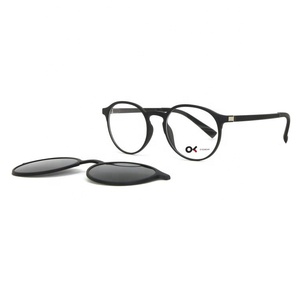
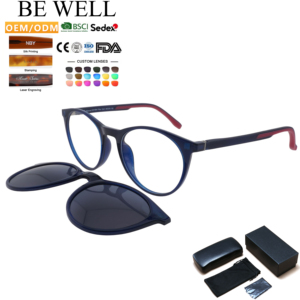
2025 Unisex Clip-On Glasses Frame 2 in 1 Ultem Polarized Magnetic Sunglasses Model 95169
- Base Material: Aerospace Ultem (PEI)
- Frame Weight: 8.8 grams (Excluding Demo)
- Lens Utility: Prescription + Polarized Clip
In modern ophthalmic dispensing, patient satisfaction is directly correlated with frame ergonomics, prolonged temporal comfort, and structural resilience. Sourcing from premier Chinese optical manufacturing hubs—backed by over 75 years of optical industry curation and US distribution heritage—provides optical practices, retail chains, and ophthalmic laboratories with an unmatched competitive advantage. Below is a curated selection of eight high-performance, lightweight frame architectures engineered to exceed international ophthalmic standards.
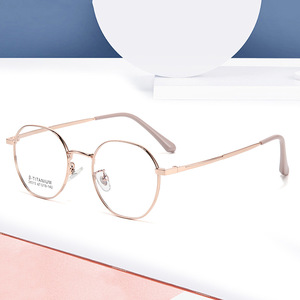
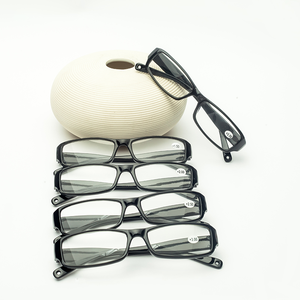
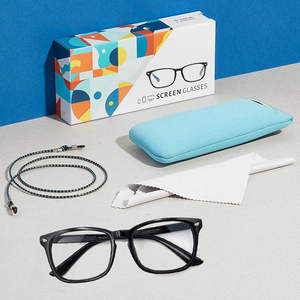
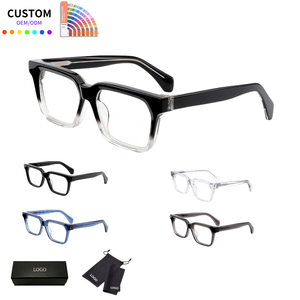
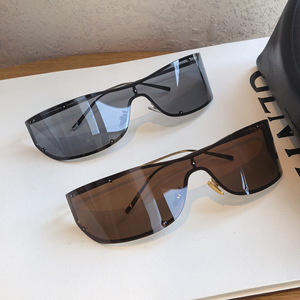
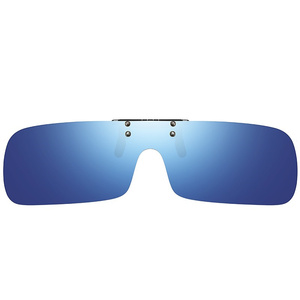
In the competitive retail eyewear landscape, optical frame ergonomics is no longer a secondary aesthetic feature; it is an ophthalmic necessity. Opticians and optometrists recognize that heavy frames cause nasal crest fatigue, temporal indentation, and micro-slippage. This slippage alters the designated vertex distance and pantoscopic tilt of prescription lenses, degrading the wearer's visual acuity—especially for progressive and high-index lenses. Consequently, wholesale buyers and frame category managers must evaluate lightweight optical frames through material science, structural engineering, and manufacturing process control.
Modern frame factories in China's premier eyewear clusters (such as Shenzhen for high-end CNC machining and Wenzhou/Danyang for scalable polymer injection) rely on advanced materials to achieve frames under 10 grams without compromising hinge endurance or lens grooving integrity.
| Material Classification | Specific Gravity (g/cm³) | Flexural Yield Strength (MPa) | Hypoallergenic Rating | Optimal Dispensing Application |
|---|---|---|---|---|
| Aerospace Ultem (PEI) | 1.27 - 1.28 | 110 - 125 | Medical Class VI (100% Non-reactive) | Ultra-flexible frames, magnetic 2-in-1 clip-ons, active everyday wear |
| Beta-Titanium (Ti-15V-3Cr-3Sn-3Al) | 4.65 (Compensated by micro-wire) | 900 - 1100 | Implant-Grade (100% Nickel-Free) | Minimalist rimless, luxury polygonal silhouettes, flexible temples |
| High-Density Acetate (HDCA) | 1.28 - 1.31 | 75 - 88 | High (Organic Cellulose Derived) | High-definition classical profiles, vintage keyhole bridges with thin walls |
| Grilamid TR-90 Polymer | 1.14 - 1.15 | 85 - 95 | Certified ISO 10993 Non-allergenic | Pediatric eyewear, sports vision frames, entry reading glasses |
| Standard Nickel Silver / Monel | 8.80 - 8.90 | 350 - 450 | Moderate to Low (Requires Barrier Plating) | Legacy traditional metal frames (Rapidly phased out by tier-1 brands) |
When engineering high-index prescription frames (-4.00D to -10.00D), rim grooving stability is critical. Ultem (polyetherimide) provides continuous elastic recovery under ambient temperatures ranging from -30°C to 120°C, meaning cold lens insertion or standard lab edger bevelling will not produce stress fractures around the rim lock. Meanwhile, cold-forged Beta-Titanium temples offer custom tension calibration for larger head sizes without permanent deformation, ensuring wide-fit compatibility across diverse demographic profiles.
Understanding emerging wholesale and technological shifts allows institutional buyers, clinic managers, and eyewear brand owners to balance inventories and maximize retail margins.
Dispensaries are replacing traditional sunglasses racks with 2-in-1 and 3-in-1 modular optical systems. Using sub-millimeter neodymium magnets seamlessly embedded into the frame's end-pieces, wearers transition from anti-blue digital prescription lenses to polarized driving lenses or specialized FL-41 therapeutic filters without carrying a secondary frame case.
Agile optical chains avoid high inventory risks by adopting flexible OEM/ODM manufacturing models. Advanced 5-axis CNC router lines and multi-cavity modular tooling allow brand distributors to order customized eye-size ratios, pantoscopic temple curves, and custom laser brand engravings at batch volumes as low as 100 to 300 pieces per SKU.
Lightweight frames are combining with protective lens technologies. Factory-direct integrations now include blue-attenuation substrates (415nm–455nm filtering without cosmetic yellow shift), chromatic tinting for photophobia, and anti-glare hydrophobic vacuum AR coatings, transforming everyday optical frames into preventive healthcare medical devices.
Global optical distribution requires anatomical adaptability. Next-generation lightweight metal and polymer bridges feature multi-axis step-down nose pad arms and widened nasal flare angles (28° to 34°), preventing cheekbone contact and frame sliding across both low-bridge Asian nasal profiles and high-bridge Caucasian profiles.
ESG compliance is now standard in hospital tenders and European optical procurement. Leading Chinese frame manufacturers utilize bio-based acetates derived from certified sustainable wood pulp and cotton lint (plasticizer migration below 0.1%), paired with solvent-free waterborne tumbling barrels to eliminate volatile organic compound emissions.
Labs demand tighter dimensional tolerances (±0.15mm) across frame eyewires. Modern lightweight polymer and titanium chassis maintain strict groove depth and bevel angles (110° to 120° V-bevel), eliminating manual edging adjustments and boosting bench production speeds for automated high-volume labs.
Connecting US optical brand management and domestic distribution in St. Cloud, Minnesota, with world-class Chinese optical engineering facilities creates a reliable, high-margin supply pipeline for our partners.
Founded on multi-generational optical experience, our team approaches frame engineering through a clinical dispensing lens. We evaluate temple pressure distributions, center-of-gravity shifts, and bridge splay angles to ensure our frames meet rigorous real-world standards.
Our catalog features over 447 active styles across 19 specialized collections—including titanium, flexible memory materials, pediatric lines, and extended-fit designs. This lets retail buyers consolidate orders under one verified supplier without sacrificing SKU diversity.
Every production batch passes strict physical testing before export, including 25,000-cycle spring hinge fatigue tests, bridge deformation tests according to EN ISO 12870, sweat-resistance nickel release tests (EN 16128), and optical axis groove verifications.
By pairing precision high-volume manufacturing in China with a central distribution hub in St. Cloud, MN, we offer flexible logistics. Partners can choose between factory-direct container shipments for maximum margins or domestic inventory fulfillment for fast board replenishment.
We guide your frames from initial 2D hand sketches and 3D CAD/CAM surfacing through to rapid SLA resin prototypes, mold creation, custom Pantone acetate matching, PVD vacuum plating, and custom temple tampo printing.
You work directly with licensed optical technicians and dedicated international supply chain managers who speak fluent optical jargon—from A-B-ED-DBL sizing dynamics to pantoscopic angles—ensuring fast, accurate communication on every order.
Detailed technical, contractual, and logistical answers to help optical sourcing directors and practice owners make informed supply chain decisions.
Whether expanding an independent practice assortment, curating an enterprise private label collection, or securing high-volume OEM factory manufacturing, our team delivers consistent quality backed by 75+ years of optical expertise.