High-Turnover Ready-Stock Inventory Collections
Direct factory production lines maintained under strict EN ISO 12870 mechanical fatigue tolerances, featuring premium acetate polymers, medical-grade pure titanium, and UV400 ophthalmic blocking technologies.
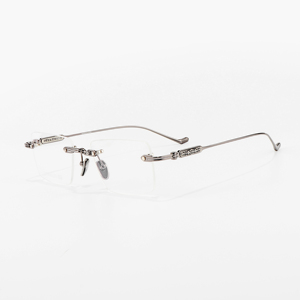
Top Reader Grade Pure Titanium Black Gold Gun Silver Optical Prescription Luxury Brand Frameless Wholesale Glasses Manufacturer
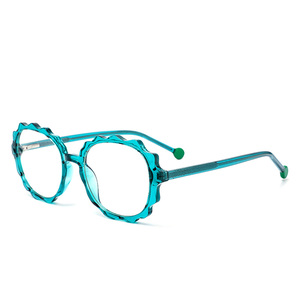
Wholesale Promotional Glasses Mix Factory Price Acetate Eyeglasses Frames Cheap Stock Ready Optical Glasses Frames
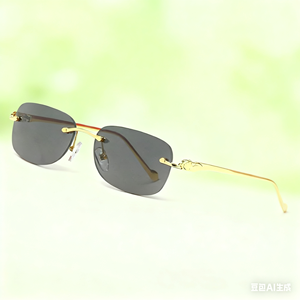
Luxury Frameless Leopard Head Sunglasses Factory Wholesale Gold Oval Frame Fashion Trend Comfortable for Men and Women sunglasses brand luxury
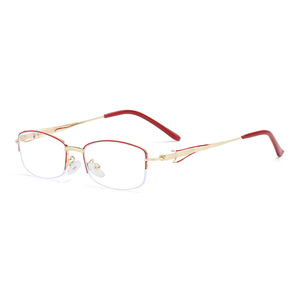
2026 Fashionable No-Makeup Ultra-Light Semi-Rimless Plain Glasses for Women Comfortable Anti-Blue Light UV400 Lenses
Wholesale Factory Cheap PC Kids Sunglasses Fashionable UV400 Carton Eyewear Candy Color Sunglasses for Boys and Girls
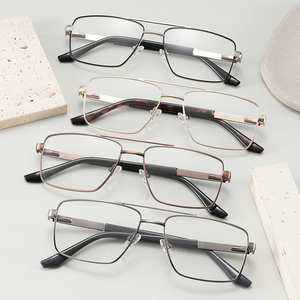
New Metal Rim Optical Prescription Glasses Adults Eyeglasses Frames Ready Stock Myopia Glasses Wholesale Fast Shipping LE8877
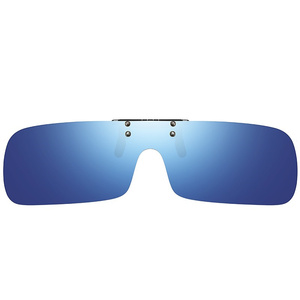
2023 Hot Selling Clip on Sunglasses Polarized Flip up Style Fashion Clip on Glasses Tac Polarized Lenses Uv400
Ophthalmic Metrology and CE Regulatory Framework
Optical frame inventory intended for commercial distribution across the European Economic Area must satisfy strict regulatory baselines under Regulation (EU) 2017/745 (MDR) for Class I non-invasive medical devices and international standard EN ISO 12870.
MDR (EU) 2017/745 Class I Verification
Under European Medical Device Regulation (MDR 2017/745), spectacle frames are cataloged as Class I medical devices. Compliant factories maintain comprehensive Technical Documentation files (Annex II and III), complete with formal Risk Management Analysis (EN ISO 14971) and continuous Post-Market Surveillance (PMS).
- EU Declaration of Conformity (DoC) validation
- Authorized EU Representative (EC REP) tracing
- Complete batch-level traceability records
EN ISO 12870:2018 Stress Protocols
Ophthalmic frames endure rigorous mechanical endurance regimens. Factory testing requires frames to withstand 500 mechanical flexing cycles without permanent structural deformation exceeding 5mm. Bridge retention ensures lens retention integrity under accidental ocular impact.
- 20,000+ cycle temple hinge fatigue endurance
- Thermal stability rating: 60°C ± 2°C distortion resistance
- Drop-ball fracture and shatter resistance
Biocompatibility & REACH Compliance
Direct epidermal contact zones—nose pads, bridge elements, and temple tips—must satisfy chemical contact mandates. Testing eliminates allergic dermatitis risks under REACH Regulation (EC) 1907/2006 for hazardous phthalates, cadmium pigments, and polycyclic aromatic hydrocarbons.
- Nickel release rate < 0.5 µg/cm²/week (EN 16128)
- ISO 10993 cytotoxicity and skin irritation certification
- 24-hour cyclic artificial perspiration immersion resistance
AQL 1.0/2.5 Optical Dispensing Inspection Standard
Optical frames arriving at commercial distribution hubs undergo ANSI/ASQ Z1.4 sampling. Critical optical tolerances require front curve variance ≤ 0.25D, pantoscopic tilt accuracy within ± 1.5°, and vertex distance alignment stability across acetate curing and metal annealing phases.
Future Procurement Trends in Wholesale Optical Inventories
How progressive optometry practices, clinical retail chains, and international wholesale distributors are re-engineering their frame replenishment pipelines to balance margin security and capital liquidity.
Decentralized Just-In-Time (JIT) Buffer Stocks
Global supply chain volatility has made ultra-lean inventories hazardous. Procurement directors are migrating to hybrid stocking architectures: retaining core baseline stock (aviator, modified oval, rectangle) in domestic central distribution centers (such as St. Cloud, Minnesota) while linking automated EDI reorders to factory floor batch allocations.
This hybrid methodology compresses restocking lead times from 90 days down to 48–72 hours for high-velocity dispensing categories.
Bio-Acetate & Circular Polymers
The European Green Deal and corporate ESG mandates are driving optical buyers toward biodegradable cellulose acetates derived from wood pulp and cotton lint. Chemical plasticizers like diethyl phthalate (DEP) are replaced with plant-derived bio-esters, achieving a certified bio-content score exceeding 68%.
Factories incapable of documenting bio-sustainability certificates face increasing margin friction in major European institutional tenders.
Morphological Ergonomics & Extended Sizing
One-size-fits-all sizing strategies create unsold dead-stock on retail frame boards. Modern optical buying prioritizes specialized ergonomic lines—such as dedicated extended-fit silhouettes (wider bridge spans, 150mm+ temple runs) and pediatric frames engineered with bend-tolerant shape memory polymers (K-Flex lines).
Assortments curated across granular face-width demographics generate 38% faster inventory turnover at the clinical dispensing counter.
Technological Advancements in Optical Frame Production
From robotic five-axis subtractive milling to selective laser sintering (SLS) additive manufacturing, optical frame production is transitioning into high-precision micro-engineering.
Sub-Millimeter 5-Axis CNC Milling
Traditional die-cut acetate processes are being replaced by automated five-axis CNC machining centers. Digital CAD/CAM tooling delivers frame channel bevel accuracies within ±0.03mm. This eliminates lens edging pop-outs when opticians glaze high-cylinder (cyl) and high-minus refractive lenses.
Physical Vapor Deposition (PVD) Coating
Galvanic wet electroplating is increasingly replaced by vacuum-chamber Physical Vapor Deposition (PVD). By depositing titanium nitride (TiN) or carbon-based diamond-like carbon (DLC) coatings at the ionic level, optical metal frames gain surface hardnesses reaching 2,500 Vickers, preventing flaking, chipping, and salt corrosion.
Beta-Titanium Laser Micro-Welding
High-end frameless rimless mountings and bridge joints demand micro-welding methods that preserve metallurgical crystal elasticity. Precision fiber-laser welding in pure argon shielding chambers prevents alpha-phase embrittlement, retaining tensile flexibility up to 1,200 MPa without hinge snapping.
Minnesota Distribution Hub Backed by Integrated Global Manufacturing
With operational roots centered in St. Cloud, Minnesota, Global Optique bridges the divide between cutting-edge overseas manufacturing facilities and localized, high-turnover optical wholesale distribution. We serve independent optometry networks, large retail groups, and international eyewear distributors who require rigorous CE documentation without bloated lead times.
Our comprehensive catalog spans 447+ distinct frames across 19 purpose-built collections, including heavy-duty industrial safety-minded frames (armouRx), feminine luxury acetates (Chic, Paola Belle, Contessa), extended fit solutions (Wide Guyz), ultra-durable pediatric programs (Junior Elements, Dr. Seuss, Tots), and surgical-grade memory metals (Executive Titanium, K-Flex).

Stringent Quality Assurance
Every inbound production lot undergoes laboratory verification for hinge fatigue, frame wrap stability, and nickel release.
US-Based Logistics Engine
Centrally warehoused in Minnesota for rapid nationwide fulfillment and consolidated global freight forwarding.
Dispensing-Optimized Engineering
Universal lens groove geometries enable seamless edging in progressive, high-cyl, and polycarbonate lab runs.
Dedicated Account Strategy
Personalized frame board curation, merchandising consultation, and custom stock balancing support.
Frequently Asked Questions by Optical Procurement Managers
Clear technical answers concerning CE marking validation, custom manufacturing tolerances, batch certification, and inventory replenishment cycles.
What legal documentation accompanies CE certified optical frame shipments?
Every production lot is supported by an official EU Declaration of Conformity (DoC) identifying the Class I medical device classification under Regulation (EU) 2017/745. Furthermore, test certificates verifying compliance with EN ISO 12870 (mechanical endurance) and EN 16128 (nickel release rate < 0.5 µg/cm²/week) are permanently filed within the technical dossier available to institutional buyers for customs and health authority audits.
How do your factories prevent bridge deformation and frame splay over time?
In acetate collections, we utilize double-annealed, aged cellulose sheets reinforced by stainless steel internal wire cores with directional serrations. In metal frames, bridges are manufactured from cold-drawn monel or titanium alloys subjected to high-frequency induction soldering, ensuring they exceed the EN ISO 12870 threshold of withstanding 500 cyclical flexions without permanent structural deformation.
Can optical practices order low Minimum Order Quantities (MOQs) from ready-stock?
Yes. While custom OEM manufacturing lines typically require MOQs of 300 to 500 units per colorway, our ready-stock warehousing program enables authorized practitioners, opticians, and optical retailers to order low minimums across any of our 447+ active catalog styles. This structure minimizes inventory overhead while maintaining consistent dispensary board turnover.
What is the typical warranty return rate for your ophthalmic inventory?
Due to multi-stage factory quality control (AQL 1.0 major defect standard) and the use of Teflon-coated hinge screws and flex spring components, our overall clinical return rate is kept below 0.38% across all product lines. In the rare event of a material or manufacturing defect, full warranty replacements are processed promptly via our Minnesota distribution hub.
How are lens bevel grooves calibrated for high-index and progressive glazing?
All eye wires and rim channels are cut to a standardized 0.6mm depth with a 110° internal V-bevel profile. This dimensional precision ensures compatibility with both automated tracer-edger machinery (e.g., Essilor, Nidek, MEI) and manual lab finishing, preventing lens slippage, optical distortion, and stress cracks when edging high-index 1.67 and 1.74 lenses.
Are your titanium frames certified pure titanium (Ti-P) or beta-titanium alloy?
Our technical specifications clearly distinguish between pure titanium and beta-titanium components. Collections like Executive Titanium feature Grade 4 pure titanium (> 99.2% Ti) in front chassis and bridge elements for maximum biocompatibility and corrosion resistance, while temples utilize flexible beta-titanium (Ti-15V-3Cr-3Sn-3Al) to deliver optimal spring retention without permanent deformation.
Do you offer custom branding and private label adaptation on stock models?
Yes. Qualified optical chains and regional distribution networks can leverage our Private Label Program. We provide high-precision pad printing, laser inner-temple etching, custom CE marking compliance formatting, personalized presentation packaging, and demo-lens pad printing while preserving full ISO 12870 technical audit traceability.
What is the standard order lead time for international distributor shipments?
Ready-stock catalog items are dispatched from our central warehouse facilities within 48 to 72 hours following order verification. For consolidated sea or air bulk container dispatches to European, Asian, or Latin American hub ports, door-to-door transit times typically span 5 to 12 business days with complete export documentation and Harmonized System (HS) code compliance.
Secure Your CE Certified Optical Inventory Allocation
Connect with our optical sourcing specialists to receive our comprehensive wholesale master catalog, schedule sample batch evaluations, or establish regional inventory replenishment accounts backed by 75+ years of optical supply chain expertise.
Send an Inquiry