
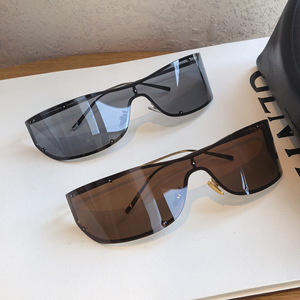
UV400 Shield
Micro-Bridge
Oversized Rimless Shield Sunglasses AC Lens Metal Frame UV400 Wholesale
Inquire Now
Curated commercial models engineered with narrowed nose bridges, elevated silicone and titanium pad arms, flattened pantoscopic tilt, and reduced splay angles to prevent slippage on shallow nasal profiles.
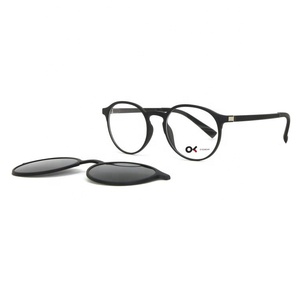
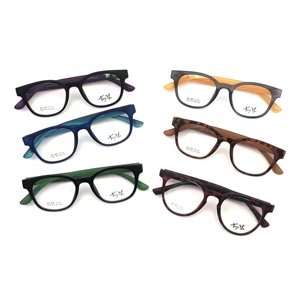
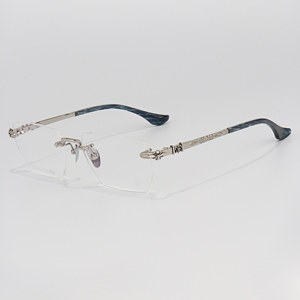
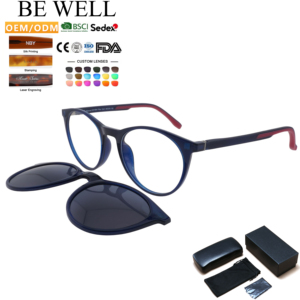
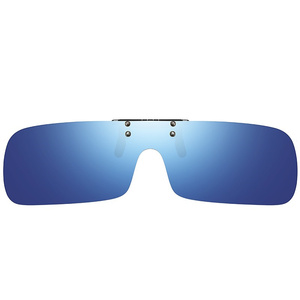
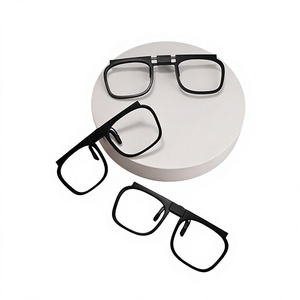
A rigorous examination of cranial morphology, optical center stability, and mechanical pad-arm engineering in modern ophthalmic dispensing.
Standard frames feature a 25° to 30° pad splay angle that fails to grip low bridges. Low bridge frames modify this splay angle to 15°–20° while extending pad shank stems by 2.5mm to 4.0mm, shifting mechanical support from nasal cartilage to bony anterior margins.
Standard frames carry a forward vertical tilt of 8° to 12°, causing the lower rim to drive into cheekbones when the wearer smiles or speaks. Low bridge specifications restrict pantoscopic tilt to 4° to 6°, preserving the vertex distance between 11mm and 13mm.
Frames built on aggressive 6-base or 8-base frame curves press lenses into high malar regions. Low bridge engineering employs a flattened 3.5-base or 4-base frontal curve, matching facial flatness while preventing peripheral lens distortion.
| Engineering Metric | Standard Western Geometry | Low Bridge / Asian Fit Geometry | Clinical Significance for Retailers |
|---|---|---|---|
| Bridge Width (DBL) | 18mm – 21mm | 14mm – 16mm (Effective) | Stops frames sliding down nose; stabilizes optical vertex. |
| Pad Stem Height | Standard 6.0mm shank | Extended 8.5mm – 10.5mm 3D bend | Lifts frame clear of cheekbones; stops pressure ulcers. |
| Pantoscopic Tilt | 8° – 12° Downward | 3° – 6° Vertical Calibration | Eliminates facial oil smearing and lens misting from cheeks. |
| Frame Wrap Base | 5.5 – 6.0 Base Curve | 3.5 – 4.0 Flatter Frontal Base | Stops lateral temple flare; provides a clean anatomical wrap. |
| Compliance Standard | EN ISO 12870 General | CE EN ISO 12870 + Nickel Free | Certified biocompatibility under EU MDR 2017/745 Class I. |
How shifting demographic demands, digital lens designs, and high-performance polymers are redefining optical inventory planning for 2026–2030.
Frame buyers are moving away from heavy cellulose acetate toward pure Japanese titanium, beta-titanium, and Ultem (polyetherimide) resin. These materials reduce bridge payload to under 12 grams, cutting the gravitational pull that causes slipping on shallow bridges.
Alternative Fit is no longer an East Asian regional niche. North American and Western European retailers report growing demand driven by diverse urban populations and patients with varied facial profiles, making low-bridge inventory essential for retaining walk-out prescriptions.
Modern high-index progressive and digital free-form lenses require exact optical center alignment. If a frame slips down by 3mm, prescription performance drops by up to 35%. CE-certified low bridge chassis guarantee lens centers remain aligned precisely with the pupil.
Combining 75+ years of Minnesota-based optical distribution heritage with advanced OEM manufacturing standards and verified CE certification.
Every frame lot undergoes compliance testing under EN ISO 12870:2018 for thermal stability, perspiration endurance, optical clarity, and zero nickel release (EN 16128).
With 447+ wholesale styles across 19 curated collections—from Executive Titanium to Dr. Seuss, armouRx, and Wide Guyz—we stock specialized fits for toddlers through extended-width adults.
Low minimum orders (MOQs) for established practices, consolidated export shipping documentation (EUR.1, Certificate of Origin, FDA Device Listing), and rapid replenishment.
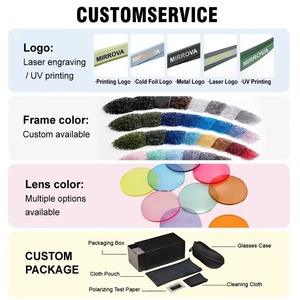
Private label capabilities including custom logo pad-printing, laser temple core engraving, customized bridge pad-arm tooling, and tailor-made retail packaging kits.
Essential guidance for inventory directors, clinical dispensers, and overseas eyewear buyers.
Direct wholesale pricing, comprehensive CE & FDA export compliance portfolios, and dedicated B2B account support from an established industry supplier. Request our wholesale line-sheet and sample program today.
Inquire Now