
Flexible eyewear frames are designed to bend under pressure and return to shape, making material choice and construction especially important. Buyers often compare Chinese manufacturers for product variety, production capacity, customization, and export experience. A supplier’s catalog is only a starting point. Samples reveal more.
This guide to China’s top 10 flexible eyewear frame manufacturers introduces companies worth evaluating and the details buyers should verify. Look closely at frame materials, hinge design, temple flexibility, surface finish, and fit around the nose and ears. Ask for technical specifications and quality-control procedures. Where available, review test results for repeated bending, temperature changes, and everyday wear. Small details matter.
A frame that feels soft in a showroom may not stay comfortable after hours of use. That difference deserves attention. Compare sample consistency, minimum order quantities, lead times, customization options, and communication before choosing a factory. Confirm that product claims match the documentation supplied, and request updated samples when designs change. Rankings can simplify research, but they cannot replace direct checks; capabilities vary by model, and public information may be incomplete. This overview is intended as a practical shortlist, not a guarantee of performance. Use it to ask sharper questions, then assess each manufacturer against your design, budget, and quality requirements.
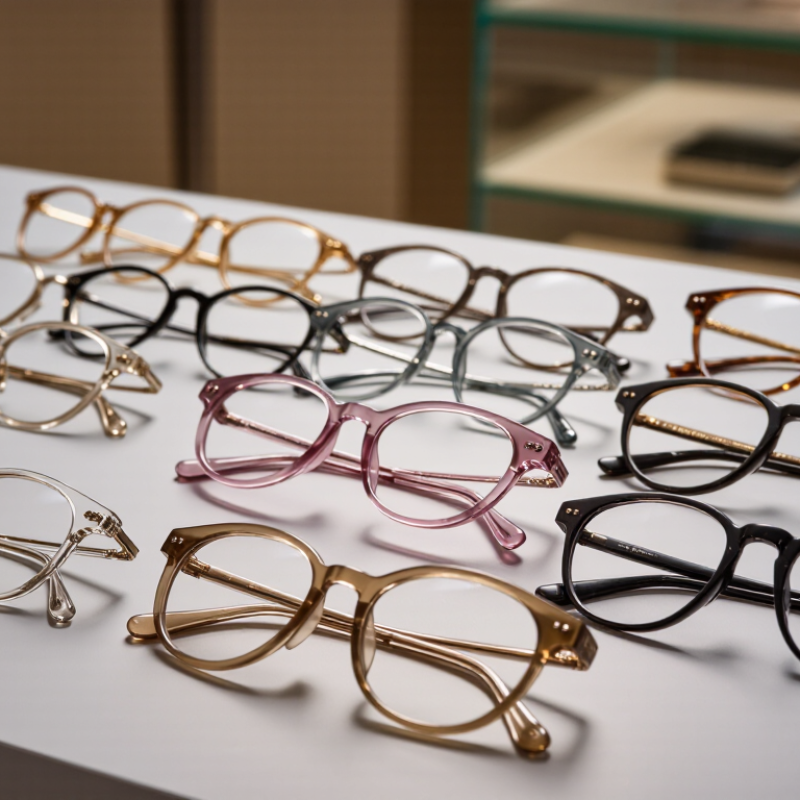
What Flexible Eyewear Frames Are and How They Are Made
Flexible eyewear frames bend under pressure and return toward their original shape. They are commonly made from flexible polymers, such as thermoplastic polyamide, rather than conventional rigid acetate or metal. Their spring comes from the material and frame geometry: thin, curved temples can flex around the wearer’s head, while thicker sections support the bridge and hinges. Flexible does not mean unbreakable. Repeated bending, heat, or a poor fit can still cause damage.
Manufacturing typically starts with drying and blending polymer pellets, followed by injection molding into frame fronts and temples. Tool temperature, pressure, and cooling time affect surface finish and dimensional accuracy. Technicians then trim edges, smooth contact points, fit hinges, and inspect alignment. ISO 12870:2024 sets requirements and test methods for spectacle frames, including tests relevant to durability and resistance. Grand View Research estimated the global eyewear market at USD 183.36 billion in 2023; this broad figure covers eyewear overall, not flexible frames alone. That distinction matters when reading market claims.
Tips: Ask suppliers for material specifications and test records, not just “flexible” claims. Check that temples flex evenly, with no sharp whitening or creaking. A frame that feels soft in a showroom may still feel tight after hours of wear.
| No. | Material or Design Approach | Typical Manufacturing Method | Flexibility and Practical Characteristics | Common Considerations |
|---|---|---|---|---|
| 1 | Thermoplastic polyamide (nylon-family materials) | Pellets are dried, melted, injection-molded, cooled, trimmed, and finished. | Can produce lightweight frames with useful flexibility; properties vary by grade and frame geometry. | Material grade, wall thickness, mold design, and processing conditions affect performance. |
| 2 | Polyamide-based flexible frame compounds | Compound is injection-molded into frame fronts or temples, then inspected and assembled. | Designed grades can combine low weight with resilience and impact resistance. | “Flexible” is not a single standardized material specification; supplier data should be checked. |
| 3 | Thermoplastic polyurethane (TPU) | Thermoplastic material is processed by molding or extrusion, followed by cutting and assembly where required. | Often offers high elasticity and abrasion resistance, depending on formulation. | Optical-frame suitability, fit stability, surface feel, and lens retention require design testing. |
| 4 | Thermoplastic elastomer (TPE) | Typically molded into flexible components such as temples, tips, or nose-contact parts. | Soft, elastic grades can improve comfort and help components bend under load. | May be used for selected components rather than the entire frame; properties differ by grade. |
| 5 | Polypropylene | Usually injection-molded; molded parts are trimmed and assembled with compatible components. | Lightweight and capable of flexing, with performance determined by part design and resin grade. | Rigidity, hinge attachment, and dimensional stability should be evaluated for the intended frame. |
| 6 | Polycarbonate | Pellets are injection-molded into frame components, then finished and assembled. | Known for impact resistance; it can flex, but should not automatically be treated as a memory-flex material. | Frame shape, thickness, and stress around hinges influence durability and fit. |
| 7 | Cellulose acetate | Sheets or blocks are cut, shaped, laminated where applicable, tumbled, polished, and assembled. | Offers a broad range of colors and finishes; it is generally valued more for appearance and adjustability than extreme flexibility. | Heating and skilled adjustment may be used in fitting; it should not be described as inherently unbreakable. |
| 8 | Beta-titanium components | Metal sheet or wire is cut, formed, joined, finished, and assembled into frame parts. | Some beta-titanium alloys can provide spring-like flexibility at relatively low weight. | Alloy, temper, forming, and joining methods affect the finished component’s behavior. |
| 9 | Shape-memory alloy components, such as nickel-titanium alloys | Wire or strip is formed and heat-treated to achieve the required component shape and properties. | Can recover toward a trained shape after bending within the material’s design limits. | Often used in selected frame parts; nickel sensitivity and applicable product requirements should be considered. |
| 10 | Spring hinges or flexible temple construction | Small hinge mechanisms are manufactured and fitted to molded or metal temples during assembly. | Allows temples to open beyond their ordinary resting position and return, depending on hinge design. | This is a construction feature, not a frame material; hinge quality and assembly tolerances matter. |
FAQS
Gently flex the temples and see whether they return to shape. Check that the hinges feel secure, not brittle or overly loose. Small details matter.
Look at hinge movement, surface finish, frame alignment, and fit. A polished catalog image cannot show how stiff a hinge feels in your hand.
Share dimensions, preferred materials, colors, and packaging requirements. Clear details can reduce avoidable back-and-forth.
Ask how the factory checks flexibility and alignment across production batches. Request relevant test records and written inspection procedures where available.
No. One sample cannot prove every batch will be consistent. Agree on acceptable tolerances and ask what happens if delivered frames differ from the approved sample.
Give each supplier the same questions and sample criteria. Compare temple flexibility, finish quality, fit, production capacity, and stated lead times. I might overlook fit if I focus too much on price.
Get written details on sample fees, minimum order quantities, production times, and inspection steps. Vague answers deserve specific follow-up questions.
They can help you test a shape or market before placing a larger order. Confirm current capacity and customization limits. Plans can change.
Conclusion
This article introduces Flexible eyewear frames, explaining their key characteristics, common materials, and the manufacturing steps that shape their comfort, durability, and appearance. It outlines how to assess Chinese manufacturers by reviewing their technical capabilities, material choices, customization options, quality-control practices, production capacity, and communication processes. Ten manufacturer profiles are presented to help readers understand the range of capabilities available in China without relying on brand names alone.
The article also compares suppliers across important production and service factors, helping buyers match a partner to their product requirements, order volume, and development timeline. It concludes with practical guidance on verifying a manufacturer, including checking relevant experience, requesting samples, clarifying specifications, and confirming quality procedures before placing an order.