
Top 10 Pediatric Optical Frames Suppliers for Global Buyers
Table of Contents
- Understanding Pediatric Optical Frames and Their Design Requirements
- Criteria for Evaluating Suppliers in the Global Market
- Profiles of Leading Pediatric Optical Frame Suppliers
- Comparing Materials, Product Range, and Customization Options
- International Sourcing, Safety Standards, and Supplier Support
- FAQS
- Conclusion
- Related Posts
Choosing children’s eyewear is not a small purchasing decision. Poor fit can mean slipping temples, pinched ears, or frames left in a school bag. Pediatric optical frames must balance fit, durability, comfort, and clear product information. Global buyers also need to compare materials, size ranges, customization options, lead times, and after-sales support—not just unit prices.
Dr. Andrea Thau, an optometrist and former president of the American Optometric Association, has emphasized the importance of children’s eye health. Her public guidance supports a useful buying principle: frame selection should serve a child’s everyday visual needs. That is not a substitute for an individual fitting or professional advice. It is a practical starting point.
This guide reviews 10 suppliers for buyers seeking Pediatric optical frames across international markets. It considers visible details such as flexible hinges, smooth edges, adjustable nose areas, and lightweight construction. Supplier claims still deserve scrutiny. A “durable” label, by itself, proves little; samples and clear specifications matter. Some comparisons may remain imperfect because availability and quality can vary by region. That uncertainty is worth acknowledging. The aim is not to declare one universal winner, but to help buyers ask better questions before placing an order.
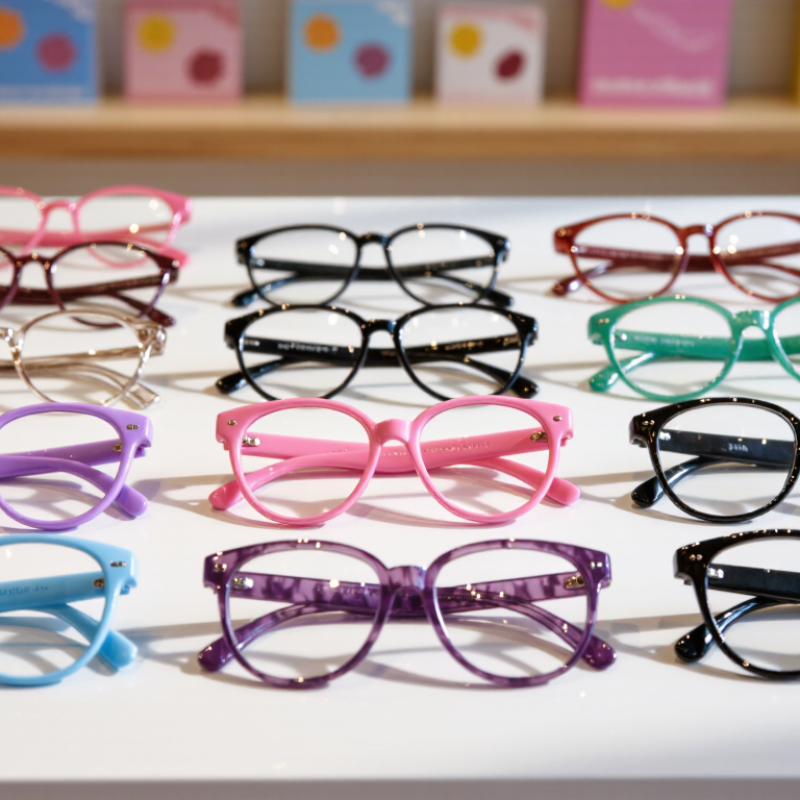
Understanding Pediatric Optical Frames and Their Design Requirements
Pediatric optical frames must fit a moving face, not just look small. Children’s bridges may be low, and their cheeks can push lenses upward. Adjustable nose pads, short temples, and secure hinges help keep the optical center aligned as a child looks around. Fit matters. A frame that slips can invite repeated adjustment and make wear less comfortable.
The World Health Organization’s World Report on Vision (2019) estimates that at least 2.2 billion people have near or distance vision impairment; at least 1 billion cases were preventable or remain unaddressed. This is a global estimate, not a pediatric frame statistic, but it highlights why accessible, usable vision correction matters. For young wearers, suppliers should consider lightweight materials, smooth edges, flexible construction, and lenses suited to the prescription and activity. Small details count.
Global buyers can ask suppliers for sizing data across age groups, material specifications, hinge-cycle testing, and clear quality-control procedures. A child’s frame should stay stable without pinching behind the ears or leaving red marks on the nose. Yet one design cannot suit every face. Even careful size charts miss real-world variation, so fitting trials and feedback from caregivers and eye-care professionals remain useful. The trade-off is real: added flexibility may improve comfort, but parts still need to withstand daily handling.
Criteria for Evaluating Suppliers in the Global Market
Global buyers should assess pediatric optical-frame suppliers through fit, safety, consistency, and service—not catalog size alone. The World Health Organization’s World Report on Vision estimates that
at least 2.2 billion people have near or distance vision impairment; at least 1 billion cases could have been prevented or remain unaddressed.
This figure covers all ages, but it underscores why dependable access to suitable eyewear matters. Ask for documented material and durability tests, including testing aligned with ISO 12870 where applicable. Review sample frames for smooth edges, secure hinges, and temples that sit comfortably behind a child’s ears.
Check whether the supplier offers multiple bridge and temple sizes, stable production capacity, traceable batches, and clear defect-handling procedures. Request recent inspection records and compare pre-production samples with finished orders. A low unit price is less attractive when frame dimensions vary between batches or replacement parts arrive late.
No checklist catches every fit issue. Real children do not fit neatly into a size chart, either.
Tips: Ask for samples in several sizes, then check fit on different face shapes. Confirm lead times, minimum order quantities, packaging details, and how the supplier handles quality complaints. Keep written specifications; small differences in hinge tension can matter.
Profiles of Leading Pediatric Optical Frame Suppliers
Profiles of leading pediatric optical frame suppliers should begin with manufacturing capability, not catalog size. The World Health Organization’s World Report on Vision (2019) estimates that at least 2.2 billion people have near or distance vision impairment; at least 1 billion cases could have been prevented or remain unaddressed. This figure covers all ages, not children alone. It signals the wider need for accessible eye care, not a direct measure of pediatric frame demand. Buyers can compare specialist frame makers, contract manufacturers, and regional distributors by asking how they manage child-sized fit, material consistency, and repeat orders.
Look beyond product photos. Request frame dimensions, hinge-cycle test records, material details, and sample units in several sizes. Check whether temples stay secure during daily movement and whether nose bridges sit comfortably on smaller faces. ISO 12870 sets requirements and test methods for spectacle frames, offering a useful reference when reviewing supplier quality documentation. Ask how defects are recorded and corrected across production batches. A weakness in many supplier profiles is limited disclosure about actual inspection practices. That matters. A neat sample can hide uneven finishing or loose hinges in a larger shipment. WHO’s report provides useful health context, but buyers still need child-specific product evidence before placing orders.
Comparing Materials, Product Range, and Customization Options
When comparing pediatric optical frame suppliers, start with materials rather than catalog size. Flexible TR-90-style polymers can suit active children because they are lightweight and bend without feeling rigid. Acetate offers richer colors and patterns, but frame weight and fit vary. Metal options may provide slimmer profiles; check the coating and contact points for comfort. Ask for material specifications and sample frames. They reveal more than product photos.
Range matters because children need different bridge shapes, temple lengths, and frame widths. A useful supplier carries small sizes, adjustable features, and practical choices for prescription lenses. Look closely at hinges, too. Spring hinges may tolerate everyday movement, but they are not a substitute for careful fitting. Check that screws sit flush and edges feel smooth. Small details matter.
Customization can include colors, printed patterns, logo placement, packaging, and size adjustments. Confirm minimum order quantities, sample fees, production lead times, and whether custom colors remain consistent between batches. Request written dimensions and tolerance ranges. Ask how replacement parts are handled. A broad customization menu sounds attractive, yet too many options can complicate quality checks. I would compare one standard sample with one customized sample before approving a larger order. Even then, fit is personal; a well-made frame may still need adjustment by a qualified optician.
| Supplier Capability Profile | Common Frame Materials | Typical Product Range | Customization Options to Confirm | Buyer Considerations |
|---|---|---|---|---|
| Flexible polymer specialist | Flexible polyamide materials, including grades marketed as TR-90 | Lightweight full-rim optical frames; assorted children’s sizes and colors | Color selection, temple details, surface finish, logo placement, packaging | Confirm the exact material grade, fit range, durability test methods, and applicable market requirements. |
| Acetate-frame producer | Cellulose acetate | Full-rim frames in varied shapes, colors, and patterns | Color combinations, front and temple shapes, decorative details, packaging | Ask about frame weight, size consistency, material specifications, and production lead times. |
| Metal-frame producer | Commonly stainless steel or other eyewear-grade metal alloys | Metal optical frames with adjustable nose pads and assorted temple designs | Frame color, plating or coating, temple design, nose-pad style, packaging | Verify coating specifications, corrosion-resistance testing, and suitability for the intended age group. |
| Mixed-material frame producer | Combinations such as metal fronts with plastic temples, or plastic fronts with metal components | Hybrid full-rim frames in a range of shapes and sizes | Component colors, material combinations, temple details, branding, packaging | Check joint construction, component materials, repairability, and spare-parts availability. |
| Small-size fit specialist | Plastic, acetate, metal, or mixed materials depending on the model | Frames designed in smaller eye sizes and bridge dimensions | Lens and bridge dimensions, temple length, color, fit-related design details | Request a size chart and physical samples; fit should be assessed for the intended wearer, not inferred from age labels alone. |
| Active-use frame specialist | Flexible plastics and other impact-resistant frame materials, depending on the design | Sport-inspired optical frames; some ranges may include strap-compatible designs | Temple or strap options, color, frame geometry, packaging | Confirm the product’s intended use and test evidence; do not assume a frame is protective eyewear unless it is certified for that purpose. |
| Soft-touch component specialist | Rigid frame materials with optional soft or flexible components, such as rubber-like temple or nose-pad parts | Children’s optical frames with comfort-oriented component designs | Component color, texture, placement, size, and packaging | Ask for material declarations and relevant safety documentation for components that may contact skin. |
| Eco-material range producer | May offer bio-based, recycled-content, or other alternative materials alongside conventional plastics | Selected children’s optical frames, subject to the supplier’s available material range | Material choice, color, frame style, labeling, packaging | Request evidence for environmental claims, including the material composition and the scope of any certification. |
| Private-label program provider | Material options vary by model and production program | Frames selected from an existing catalog, sometimes with coordinated accessories or packaging | Logo application, color selection, private-label packaging, product documentation | Confirm minimum order quantities, setup costs, sample approval steps, lead times, and ownership of artwork. |
| Custom-development provider | Material and construction depend on the approved design and manufacturing process | Made-to-specification frames developed from buyer requirements | Frame dimensions, shape, material, colors, components, branding, packaging | Agree on tooling, design approval, testing, quality criteria, production schedule, and change-control procedures before ordering. |
International Sourcing, Safety Standards, and Supplier Support
For global buyers, choosing a pediatric optical frame supplier takes more than comparing prices and catalog photos. Children need frames that fit securely, feel light, and tolerate daily handling. Ask suppliers for material specifications, batch traceability, and test reports covering frame strength and small components. Request sample frames in several sizes. Check the hinges, nose area, and temple tips by hand.
Safety documentation should match the destination market and the product’s intended use. Requirements vary, so buyers should verify current rules with qualified local advisers or testing laboratories. A supplier’s support matters just as much: clear answers, stable lead times, replacement parts, and prompt notice of material changes can prevent avoidable delays. No checklist catches everything. Even a well-documented supplier can overlook a fit issue that only appears during a child’s wear trial. Share feedback with the factory, keep records of revisions, and confirm that production samples match approved specifications. Some suppliers may respond slowly; that is worth evaluating before placing a large order.
Pediatric Optical Frames: Key International Standards
Publication years of selected ISO standards relevant to frame safety and eyewear sourcing. The year identifies the edition shown, not a supplier rating.
Standards shown: ISO 12870:2016 (spectacle frames), ISO 21987:2017 (mounted spectacle lenses), and ISO 12312-1:2022 (sunglasses and related eyewear). Verify the current applicable edition and local requirements when qualifying suppliers.
FAQS
They must fit a moving face, not simply look smaller. Low bridges and full cheeks can push lenses upward. Adjustable nose pads and short temples may help.
Check that temples sit gently behind the ears and the nose has no red marks. Smooth edges and secure hinges matter. Fit matters.
Lightweight, flexible polymers can bend without feeling rigid. Acetate offers more colors, while metal frames can have slimmer profiles. No material suits every child.
Request material specifications, durability test records, and clear inspection procedures. Ask about traceable batches and defect handling. Photos can mislead.
Try samples in several sizes on children with different face shapes. Check for slipping, pinching, and lenses shifting as the child looks around. Size charts are imperfect.
Check that hinges move securely and screws sit flush. Spring hinges may tolerate daily movement, but they cannot replace careful fitting.
Ask about sample fees, minimum order quantities, lead times, and written size tolerances. Compare a standard sample with a customized one before ordering more.
The World Health Organization estimated that at least 2.2 billion people have near or distance vision impairment. This estimate covers all ages, not children alone.
No. Faces vary, and real-world fitting can expose problems that samples or charts miss. Caregiver feedback helps, though it may not catch everything.
Conclusion
This article explores what makes Pediatric optical frames suitable for young wearers, including lightweight construction, comfortable fit, durability, and designs that can accommodate children’s changing needs. It also outlines practical criteria for evaluating suppliers, such as manufacturing consistency, product quality, communication, production capacity, and the ability to support international buyers.
Profiles of leading suppliers are considered alongside a comparison of frame materials, product ranges, sizing choices, and customization options. The article also discusses how buyers can assess safety-related product information, clarify applicable requirements for their intended markets, and review supplier documentation. Attention to shipping coordination, after-sales service, and clear communication can help buyers make informed sourcing decisions and build dependable supplier relationships.

Blog Tags: