
China Best Youth Prescription Frames for Wholesale Buyers?
Table of Contents
- Understanding Youth Prescription Frames and Their Key Features
- Materials, Fit, and Safety Factors for Children’s Eyewear
- How to Evaluate Chinese Frame Manufacturers and Product Quality
- Wholesale Pricing, Minimum Orders, and Customization Options
- Importing and Verifying Youth Prescription Frames from China
- FAQS
- Conclusion
- Related Posts
China’s wholesale market for Youth prescription frames rewards buyers who inspect more than price. A frame must fit a child’s bridge, temples, and daily routine. It should also withstand school bags, playground movement, and repeated cleaning. Small details matter: flexible hinges, smooth edges, stable nose pads, and clear size measurements. Good-looking samples are not enough.
The clinical need is substantial. WHO’s World Report on Vision (2019) estimated that at least 2.2 billion people worldwide have vision impairment or blindness; at least 1 billion cases could have been prevented or remain unaddressed. A 2016 peer-reviewed Ophthalmology study by Brien Holden and colleagues projected that nearly half the world’s population could have myopia by 2050. The researchers wrote, “The prevalence of myopia and high myopia is increasing globally at an alarming rate.” These figures describe vision needs, not frame sales. That distinction matters.
For wholesale buyers, China offers a broad supplier base, but product claims still need careful checking. Request dimensional specifications, material details, sample pairs, and consistent production records. Compare fit across several face sizes, not just one display model. Ask how suppliers control lens alignment and finish quality. A low quote can hide costly inconsistencies. And a catalog photo cannot prove comfort. This guide examines practical sourcing criteria for Youth prescription frames, while recognizing that no single design suits every young wearer.
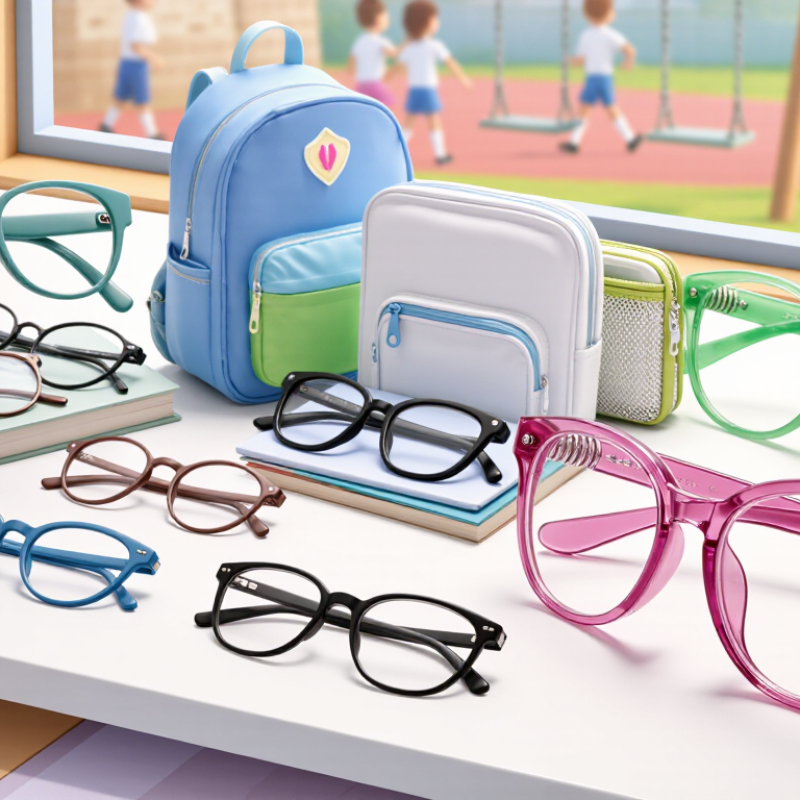
Understanding Youth Prescription Frames and Their Key Features
Youth prescription frames must balance optical function with comfort during long school days. A lightweight frame can reduce pressure on the nose, but weight alone does not guarantee a good fit. Check the bridge, temple length, and frame width against real measurements. A frame that slides during reading may need adjustment, not simply a tighter fit. Small details matter.
For wholesale buyers, lens compatibility deserves attention. Ask whether the frame’s shape and depth suit common prescription ranges, and have qualified optical staff assess individual orders. Flexible temples and secure hinges can handle everyday movement, though no design is indestructible. Inspect screw alignment, finish, and hinge action across samples. One weak hinge can become a repeat complaint.
Youth preferences also change quickly. Colors and shapes help attract attention, yet clear sizing information and consistent quality support better purchasing decisions. Keep a range of widths and bridge fits rather than assuming one style suits every child. That assumption is tempting. It is also often wrong. A sample may look excellent on a display but feel uncomfortable after an hour of wear, so fit testing should include real users and careful feedback.
Materials, Fit, and Safety Factors for Children’s Eyewear
For wholesale buyers sourcing youth prescription frames in China, material choice should balance weight, flexibility, and reliable quality control. Lightweight TR-style polymers can feel comfortable during long school days, while flexible temples may handle everyday bending better. Acetate offers a firmer feel, but thicker rims can add weight on smaller faces. Small details matter. Check that edges feel smooth, hinges open evenly, and screws stay secure after repeated movement. A frame that looks sturdy is not automatically durable; sample testing can reveal weak joints or uneven finishing.
Fit affects both comfort and useful lens positioning. Compare bridge width, temple length, frame height, and lens spacing with the child’s measurements, rather than relying on age labels alone. The frame should sit level, stay in place during head movement, and avoid pressing behind the ears. Not every child sits still. Ask a qualified eye-care professional to confirm prescription measurements and lens alignment. For active children, impact-resistant lens materials such as polycarbonate may be appropriate, subject to professional advice and the needs of the prescription. Buyers should also request consistent batch checks, clear material information, and documentation relevant to their target market. I would not assume one sizing chart works everywhere; children’s faces vary more than a catalogue suggests.
China Best Youth Prescription Frames for Wholesale Buyers? — Materials, Fit, and Safety Factors for Children’s Eyewear
| Frame Type or Feature | Typical Characteristics | Fit Guidance for Children | Safety and Quality Checks | Wholesale Evaluation Points |
|---|---|---|---|---|
| Flexible thermoplastic frames Commonly made from flexible polyamide materials |
Generally lightweight and resilient; flexibility varies by formulation and frame design. | Check that the frame sits securely without pressing the temples or sliding down. Confirm that the bridge and temple dimensions suit the intended age and face-size range. | Inspect for smooth, rounded edges, secure hinges, and consistent flexibility. Flexibility does not make a frame indestructible; check supplier test documentation. | Request material specifications, production-lot consistency checks, and samples for repeated opening, closing, and fit assessment. |
| Acetate frames Cellulose-based plastic frame material |
Available in varied colors and patterns; can be adjusted by trained optical professionals using suitable methods. | Look for a bridge shape that distributes weight comfortably and temples that do not grip too tightly. Verify fit on the target age group rather than relying on age labels alone. | Check for smooth finishing, secure joints, and no sharp edges or visible cracks. Ask for material and coating information when customers have sensitivities. | Review color consistency, finish quality, dimensional tolerances, and the availability of replacement parts. |
| Stainless-steel frames | Thin, relatively lightweight metal construction; corrosion resistance depends on the alloy, finish, and care. | Adjustable nose pads can help with bridge fit, but pads should not pinch or leave persistent marks. Confirm that temple length and frame width are appropriate. | Inspect soldered or joined areas, hinge security, and surface finish. Ask about nickel content and applicable requirements for the destination market. | Compare alloy declarations, finish durability, repairability, and spare nose-pad and screw availability. |
| Titanium frames | Often selected for low weight and corrosion resistance; cost and properties depend on the specific alloy and construction. | Assess balance and stability on the child’s face. A light frame still needs suitable lens size, bridge fit, and temple length. | Request accurate material declarations and verify that hinges, welds, and coatings meet the buyer’s quality requirements. | Evaluate material traceability, documentation, finishing consistency, and total landed cost against the target retail tier. |
| Soft temple tips or flexible components | May improve comfort or grip when integrated into a frame; performance depends on material and design. | Check that the tips follow the ear comfortably and do not create pressure points. Confirm that the frame stays in place during normal movement. | Check attachment security and surface condition. Components should not detach easily or expose sharp edges during normal use. | Ask about component materials, attachment testing, cleaning guidance, and replacement-part options. |
| Hinges and screws | Construction may include standard, reinforced, or spring hinges; hinge type alone does not establish overall frame safety. | Open and close both temples to check smooth movement and even tension. The temples should align without forcing the frame onto the child’s face. | Check for secure screws, no sharp projections, and consistent hinge action. Confirm that small parts remain secure under the supplier’s stated test conditions. | Request hinge-cycle or durability test information where available, plus details on replacement screws and after-sales support. |
| Frame sizing and prescription compatibility | Common size markings include lens width, bridge width, and temple length, usually measured in millimetres. | Use a qualified optical professional to assess frame width, bridge position, pupil alignment, temple length, and lens position. Children’s faces vary widely within the same age group. | Confirm that the selected frame can accommodate the prescribed lenses and that the finished eyewear is checked for fit and optical accuracy. | Request a size range chart, dimensional tolerances, and sample frames across the assortment before placing a bulk order. |
| Supplier documentation and market compliance | Requirements vary by destination market, product type, and intended use. | Ensure product information supports correct fitting, care, and age-appropriate selection. | Request applicable test reports, material declarations, and product-safety documentation for the target market. Verify document scope, validity, and consistency with the supplied product. | Check factory quality-control procedures, batch traceability, inspection criteria, packaging, and the process for handling defects or recalls. |
Buyer note: No single frame material is best for every child. Compare samples for fit, comfort, finish, durability, and prescription suitability, and verify applicable safety and compliance requirements in each destination market.
How to Evaluate Chinese Frame Manufacturers and Product Quality
For wholesale buyers, a low unit price means little if youth frames arrive with uneven hinges or sharp edges. Check the factory’s material declarations, production records, and inspection criteria before discussing volume. Ask for samples from different production runs, not just a polished showroom pair. Test hinge movement, lens seating, finish consistency, and fit on several head shapes. Small details matter.
The World Health Organization’s World Report on Vision notes that at least 2.2 billion people have near or distance vision impairment worldwide, with at least 1 billion cases preventable or unaddressed. That figure is not a frame-market forecast, but it underlines why dependable vision products matter. For children’s prescription frames, request documented dimensional checks and confirm that frame designs suit the intended age range. A neat sample alone proves little.
Use ISO 12870, the international standard for spectacle frames, as a reference when reviewing test plans; ask the manufacturer to identify applicable tests and share dated results. Compare those results with your own incoming checks, including screw tightness and surface defects. A factory audit can reveal storage conditions and calibration practices, yet one visit cannot guarantee every shipment. This part is imperfect. Keep written acceptance limits, and record what failed, even when the defect seems minor.
Wholesale Pricing, Minimum Orders, and Customization Options
Wholesale pricing for youth prescription frames depends on more than frame material. Acetate, stainless steel, and flexible plastics have different unit costs, while hinge type and finish also affect quotes. Ask suppliers to separate frame price, sample charges, packaging, and freight. A low unit price can look attractive, but setup fees may change the real cost. Compare like with like. Ask for written quotes at 100, 300, and 500 pieces, not just one quantity.
Minimum order quantities vary by factory, frame style, color, and packaging. Confirm whether the minimum applies to each color or the full order. That detail matters. For a first purchase, ask about mixed-color cartons and sample availability; not every supplier can offer them. Customization may include colors, temple length, bridge fit, engraving, and packaging. Share frame measurements and lens-opening dimensions in a clear specification sheet, then approve a physical sample before production. Small changes can affect tooling, lead time, and minimums. I would not assume a custom color will match a screen image exactly; lighting and material batches can shift its appearance. Ask for production timelines, defect handling, and inspection records in writing before paying a deposit.
Importing and Verifying Youth Prescription Frames from China
Importing youth prescription frames from China starts with a controlled specification, not a catalog photo. The WHO’s 2019 World Report on Vision estimated that at least 2.2 billion people have near or distance vision impairment; at least 1 billion cases could have been prevented or remain unaddressed. This is not a youth-market estimate, but it highlights why fit and dependable optical correction matter. Request a size sheet listing lens width, bridge, temple length, front width, and frame weight. Ask suppliers to document materials and tolerances for color, hinge movement, and surface finish. Small faces reveal poor fit quickly.
Before placing a bulk order, approve a reference sample and record its measurements. On arrival, inspect cartons from different parts of the shipment. Check dimensions, hinge movement, screw security, sharp edges, and finish under consistent light. Keep photos and lot codes. A caliper and checklist help, but they do not replace product testing.
ISO 12870:2016 provides a recognized framework for spectacle-frame requirements and test methods; confirm its scope with your testing partner.
A sample can pass while a carton still surprises you. Even careful checks miss things, so consider inspecting again after packing.
FAQS
Review material declarations, production records, and inspection criteria. Request samples from different production runs. A polished sample is not enough.
Check hinge movement, lens seating, finish consistency, screw tightness, and sharp edges. Test fit on several head shapes. Small details matter.
List lens width, bridge size, temple length, front width, and frame weight. Document material and acceptable tolerances. Small faces reveal poor fit quickly.
Use ISO 12870 as a reference when reviewing test plans. Ask for applicable tests and dated results. Confirm the standard’s scope with a testing partner.
Ask suppliers to separate frame price, sample charges, packaging, and freight. Compare quotes for 100, 300, and 500 pieces. Setup fees can change the real cost.
Ask whether the minimum applies to each color or the full order. Check if mixed-color cartons and samples are available. That detail matters.
Share measurements and lens-opening dimensions in a clear specification sheet. Approve a physical sample before production. Screen colors may differ from the finished material.
Inspect cartons from different parts of the shipment. Check dimensions, hinges, screws, edges, and finish under consistent light. Keep photos and lot codes.
No. One visit cannot guarantee every shipment, and a sample can pass while a carton surprises you. I would still worry. Keep written acceptance limits and record defects, even minor ones.
Conclusion
Youth prescription frames are designed to combine clear vision with comfort, durability, and a secure fit for growing children. When choosing frames, wholesale buyers should consider lightweight, skin-friendly materials, flexible construction, appropriately sized bridges and temples, and smooth edges that help reduce pressure during everyday wear. Lens compatibility and overall safety are also important, as children need frames suited to their age, activity level, and prescription requirements.
For buyers sourcing from China, evaluating manufacturers involves reviewing material specifications, production consistency, quality-control procedures, samples, and communication practices. Compare wholesale pricing alongside minimum order quantities, lead times, and available customization, such as colors, sizes, and packaging. Before placing a large order, confirm product details, inspect samples, and agree on clear verification and shipping arrangements. Careful evaluation helps buyers balance cost, quality, and reliable supply when purchasing Youth prescription frames.

Blog Tags: