In 2026, global buyers are seeking eyewear that combines reliable protection, modern styling, and workable wholesale margins. Polarized wholesale sunglasses now serve retailers, optical stores, travel shops, and online brands across diverse markets. Buyers are no longer choosing frames by appearance alone. They examine lens performance, hinge quality, packaging, and supplier consistency.
A practical collection may include classic aviators, lightweight sports frames, oversized acetate designs, and compact styles for smaller faces. Gray lenses can support balanced everyday vision, while brown lenses may enhance contrast in outdoor settings. Buyers should request clear lens specifications, sample approval, and product photographs taken in natural light. Small details matter. A loose temple arm can create returns quickly.
Experienced sourcing teams also compare minimum order quantities, replacement policies, lead times, and private-label options. Supplier claims should be supported by test reports and traceable production information. UV protection and polarization are not identical features, so both require careful verification. Regional labeling and import requirements may differ. Professional guidance helps reduce avoidable purchasing risks.
This guide evaluates 2026 collections through a buyer’s practical lens. It considers comfort after several hours, visual clarity near reflective water, frame durability, and shelf appeal. Some fashionable models may perform poorly during long wear. That is worth admitting. No buying guide is flawless. Market feedback, physical samples, and independent checks should influence the final decision. Reliable sourcing is not only about finding low prices. It is about building a repeatable supply chain that protects customer trust and supports sustainable growth.
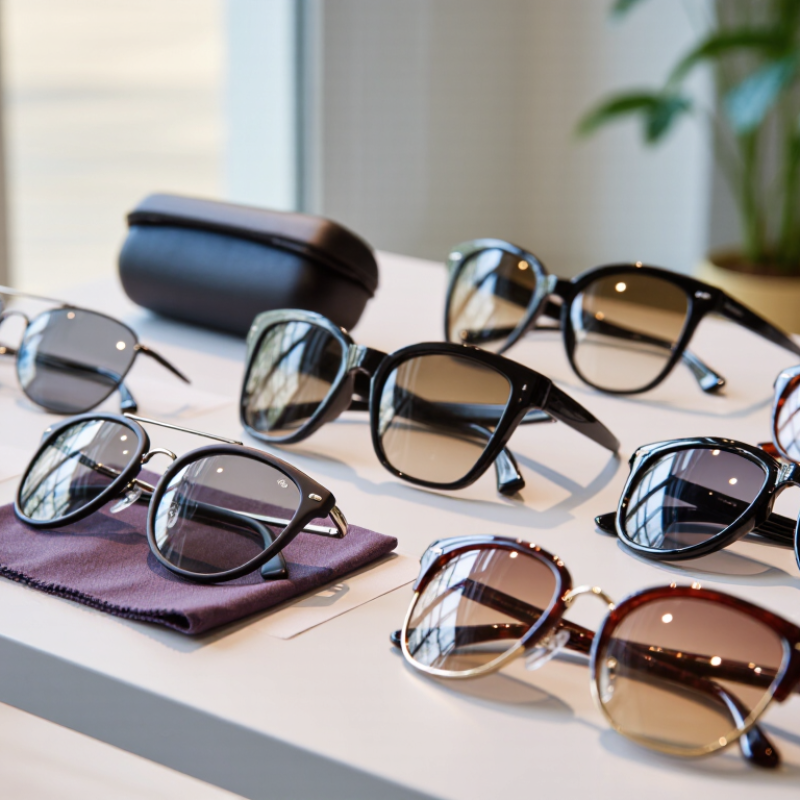
Polarized Sunglasses: Definition, Benefits, and Wholesale Applications
Polarized Sunglasses: Definition, Benefits, and Wholesale Applications
Polarized sunglasses use a filtering layer that reduces intense reflected light. This glare often comes from roads, water, glass, and bright pavement. The effect can make outdoor vision more comfortable and details easier to see. However, polarization does not automatically mean full ultraviolet protection. Wholesale buyers should request verified UV400 test results and lens performance documents.
In practical use, polarized lenses suit driving accessories, fishing collections, beach shops, sports retailers, and travel stores. A good wholesale sample should be checked outdoors, not only under showroom lights. Look for clear vision, stable hinges, comfortable nose pads, and even lens color. Packaging also matters when products travel through different climates. Moisture-resistant cases can reduce scratches and display damage.
Global buyers should compare lens materials, frame flexibility, color options, minimum order quantities, and quality inspection procedures. Consistent production is more valuable than one excellent sample. This point is easy to underestimate. Some customers may dislike polarized lenses because certain digital screens appear darker at specific angles. Color perception can also vary between users. Suppliers should explain this limitation honestly rather than promise universal comfort. Test orders remain useful, especially when a collection targets drivers, anglers, or fashion-focused outdoor shoppers.
Key Features of Top Polarized Sunglasses for 2026
In 2026, polarized sunglasses are becoming more practical, lighter, and easier to customize for wholesale markets. The key feature is reliable glare reduction. It improves comfort near roads, water, snow, and glass buildings. Polarization alone does not guarantee UV protection. Buyers should request independent test reports confirming full UVA and UVB coverage.
Lens clarity also matters. High-quality lenses should show minimal color distortion and consistent darkness across the surface. Scratch-resistant coatings can reduce damage during shipping and daily use. However, no coating remains perfect. Wholesale buyers should inspect sample pairs under bright light before placing large orders. Lens alignment, edge finishing, and visible bubbles deserve careful attention.
Frame durability is equally important for global buyers. Flexible materials can reduce breakage during fitting and transportation. Reinforced hinges may support frequent opening and closing. Lightweight frames are more comfortable, but overly thin structures can feel fragile. Fit should cover different face shapes, including wider bridge options and adjustable nose pads. Buyers should also review labeling, packaging, and regional documentation requirements. Recyclable packaging is useful, but its real value depends on actual material recovery systems. Color trends may change quickly, so balanced core shades can reduce unsold inventory. A small test order remains wise, even when the product specifications look convincing.
Popular Styles and Lens Technologies for Global Buyers
2026 Top Polarized Wholesale Sunglasses for Global Buyers
Popular Styles and Lens Technologies for Global Buyers
Global buyers are choosing polarized sunglasses that combine practical protection with adaptable styling. Grand View Research valued the global sunglasses market at approximately USD 20.4 billion in 2023. Its forecast also indicates steady growth through 2030. Demand is visible in oversized square frames, lightweight pilot shapes, and narrow wraparound designs. Neutral colors remain easier to distribute across different markets. Matte black, tortoiseshell, and transparent gray perform well in retail displays.
Polarized lenses reduce reflected glare from roads, water, and glass surfaces. However, polarization alone does not confirm ultraviolet protection. Buyers should request documented UV400 testing and material specifications. TAC lenses offer clear glare reduction and competitive wholesale pricing.
Polycarbonate lenses provide better impact resistance for active users. Photochromic options respond to changing light, though performance can weaken inside vehicles. Anti-scratch and oleophobic coatings also improve daily usability.
The World Health Organization reports that at least 2.2 billion people have near or distance vision impairment. This reinforces the need for reliable optical information, not only attractive packaging.
One assumption deserves testing: darker lenses do not automatically provide safer protection. Sample checks should examine color consistency, hinge strength, coating adhesion, and distortion. Small defects become expensive when containers reach multiple markets. Some buyers may overvalue fashion speed. That choice can create avoidable returns.
How to Evaluate Wholesale Suppliers and Product Quality
2026 Top Polarized Wholesale Sunglasses for Global Buyers
How to Evaluate Wholesale Suppliers and Product Quality
A dependable wholesale supplier should provide clear product specifications, not vague claims. Request lens material, polarization rate, UV protection data, frame composition, and hinge details. Ask for current test reports from an independent laboratory. Documents should match the actual sample.
Inspect samples under direct sunlight. Rotate each lens against an LCD screen to check polarization performance. Look for dark, even coverage without cloudy patches or visible distortion. Run a fingernail gently across the lens surface. Poor coatings may show marks quickly. Check hinges through repeated opening and closing. They should feel firm, but not stiff.
Supplier evaluation needs more than attractive prices. Review factory records, production capacity, quality-control steps, packaging methods, and defect handling. Ask how batches are traced when problems appear. Confirm minimum order quantities and realistic lead times in writing. A reliable supplier accepts reasonable inspection requests.
Do not trust one sample completely. Small production changes can affect later shipments. Request pre-production approval and random checks before dispatch. My own buying experience suggests that cheap frames often create hidden costs through returns and repacking. Still, inspections are not perfect. Human checking can miss defects inside a sealed carton. Build a small allowance for errors, and keep improving the process with each order.
2026 Top Polarized Wholesale Sunglasses for Global Buyers
How to Evaluate Wholesale Suppliers and Product Quality
Use these procurement benchmarks when comparing wholesale suppliers: UV protection should meet the UV400 requirement, polarization efficiency should be verified with a calibrated tester, optical performance should remain consistent across samples, and documentation should be available for every production batch. These are recommended quality-control targets rather than certification results for any specific supplier.
International Sourcing, Compliance, and Order Planning
2026 Top Polarized Wholesale Sunglasses for Global Buyers
International sourcing starts with a clear product specification. Define lens category, polarization performance, frame material, hinge construction, color options, and target market. Polarized lenses can reduce reflected glare from roads and water, but they do not automatically provide complete UV protection. Ask for current test reports covering UV transmission, optical quality, and impact performance. Documents should match the exact model, not a similar sample.
Compliance details need early attention. Requirements vary between destination markets, so buyers should confirm labeling, consumer information, packaging marks, and restricted-material rules before production. Request a material declaration, batch traceability, inspection procedure, and corrective-action plan. Keep records in one shared file. It saves time later.
Order planning should connect demand forecasts with production reality. Begin with pre-production samples, then approve a sealed reference sample. Confirm minimum order quantities, color ratios, carton dimensions, spare parts, and inspection timing in writing. A realistic schedule includes sampling, testing, manufacturing, final inspection, and shipping clearance. Tight deadlines create pressure. Pressure creates mistakes. I would rather accept a slightly longer lead time than receive mixed lens colors or unclear labels. Still, forecasts are imperfect, especially for seasonal eyewear. Buyers should leave room for slow-moving stock, packaging changes, and a small reorder buffer. A practical first order is often safer than an ambitious one.
FAQS
They use a filtering layer to reduce harsh reflected light. Glare often comes from roads, water, glass, and bright pavement. Outdoor details may appear clearer and more comfortable.
Not automatically. Buyers should request verified UV400 test results and lens performance documents. Polarization and ultraviolet protection are separate features.
They suit driving accessories, fishing collections, beach shops, sports retailers, and travel stores. Different shoppers may prefer different lens colors and frame styles.
Test samples under direct sunlight, not only showroom lights. Rotate each lens against an LCD screen. Check dark, even coverage without cloudy areas or distortion.
Look for stable hinges, comfortable nose pads, even lens color, and flexible frames. Gently check the lens surface for coating marks. Open and close the hinges repeatedly.
Request lens material, polarization rate, UV data, frame composition, and hinge details. Ask for current independent laboratory reports. The documents should match the actual sample.
Yes, some screens may appear darker at certain angles. Color perception can also vary between users. Honest explanations are better than promises of universal comfort.
Moisture-resistant cases can reduce scratches and display damage during transport. Buyers should confirm quality steps, batch tracing, and defect handling. Inspections help, but they are not perfect.
Not completely. Later production changes may affect materials, coatings, or assembly. Request pre-production approval and random checks before dispatch. Keep an allowance for possible defects.
Conclusion
This guide to 2026 Top Polarized Wholesale Sunglasses explains how polarized lenses reduce reflected glare and improve visual comfort, making them valuable for outdoor, driving, travel, and everyday eyewear markets. It highlights essential features for global buyers, including effective glare control, UV protection, optical clarity, durable frames, comfortable fitting, reliable hinges, and designs suitable for different customer preferences. Popular options range from classic aviators and modern square frames to lightweight sport styles, with lens technologies such as gradient, mirrored, photochromic, and impact-resistant solutions.
For successful purchasing, buyers should assess supplier experience, product consistency, sample quality, customization capabilities, packaging, communication, and inspection procedures. The guide also discusses international sourcing, material documentation, labeling, applicable safety and environmental requirements, shipping arrangements, minimum order quantities, lead times, payment planning, and after-sales support. By combining product evaluation with careful compliance checks and realistic order planning, importers and retailers can select Polarized wholesale sunglasses that offer dependable quality, market appeal, and sustainable business value.